Aging Parent Driving Safety: When to Worry and How to Have the Conversation
Few conversations with aging parents are as difficult as discussing their driving. For many seniors, driving represents independence, freedom, and self-sufficiency. Suggesting they stop driving can feel like an attack on their identity and autonomy.
Yet the stakes couldn't be higher. Older drivers are at increased risk of being involved in crashes, and when they are, they're more likely to be seriously injured or killed. According to the CDC, drivers aged 70 and older have higher crash death rates per mile driven than middle-aged drivers.
This guide will help you recognize when your parent's driving may be becoming unsafe, prepare for the conversation, explore alternatives to driving, and navigate the emotional challenges of this transition.
Understanding Driving and Aging
Aging affects the abilities needed for safe driving in several ways. Understanding these changes helps you assess risk and communicate with your parent.
How Aging Affects Driving Ability
Vision Changes
Vision is perhaps the most critical sense for driving. Age-related changes include decreased night vision, increased sensitivity to glare, reduced peripheral vision, slower adjustment between light and dark, difficulty judging distances, and conditions like cataracts, glaucoma, and macular degeneration.
Cognitive Changes
Driving requires constant mental processing. Age-related cognitive changes can affect reaction time and processing speed, ability to divide attention between multiple tasks, short-term memory and navigation, judgment and decision-making, and ability to handle complex traffic situations.
Physical Changes
Physical abilities matter for vehicle control and safety awareness. Changes include reduced flexibility for head turning and mirror checking, decreased strength for steering and braking, slower reflexes, chronic conditions like arthritis that affect grip and movement, and medications that cause drowsiness or impairment.
Many people drive safely well into their 80s or beyond. Age alone doesn't determine driving ability. What matters is functional ability: can your parent see well enough, react quickly enough, and make good decisions while driving? Focus on abilities, not age.
The equipment that changes the most
Most of what caregiving costs is time. These four are the purchases that reliably buy some of it back, and they are the ones families tell us they wish they had bought sooner.
 Drive Medical Hydraulic Patient Lift
A full lift is what makes one person able to manage a transfer alone. It is the single purchase that most often delays a move into residential care.
Check price on Amazon →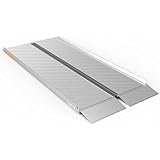 EZ-ACCESS Singlefold Wheelchair Ramp, 6 ft
Folds like a suitcase and carries in a car boot, so the same ramp handles the front step at home and the kerb at an appointment.
Check price on Amazon → Drive Medical Nitro Rollator with Seat
The seat matters more than the wheels. Being able to stop and rest is what decides whether someone still goes out at all.
Check price on Amazon → Vive Stand Assist Rail for Couch or Chair
Getting out of a low sofa is where most falls at home start. This is the cheapest thing on the list and often the first one needed.
Check price on Amazon →As an Amazon Associate we earn from qualifying purchases, at no extra cost to you. Researched guidance, not medical advice. Prices change, so check before buying.
Warning Signs of Unsafe Driving
Watch for these red flags that may indicate your parent's driving is becoming unsafe:
On the Road
- Frequent close calls or minor accidents
- New dents, scrapes on car
- Getting lost on familiar routes
- Driving too slow or too fast
- Failing to observe traffic signs/signals
- Difficulty changing lanes
- Inappropriate braking
Behavioral Changes
- Avoiding night driving
- Avoiding highways or busy roads
- Getting honked at frequently
- Feeling nervous or exhausted after driving
- Others refusing to ride with them
- Decreased confidence while driving
Health-Related Signs
- Vision problems not corrected by glasses
- Hearing loss affecting awareness
- Cognitive decline or dementia diagnosis
- Multiple new medications
- Difficulty walking or physical limitations
- Recent falls
Vehicle Signs
- Unexplained damage to car or property
- Increase in traffic tickets
- Insurance company concerns
- Reports from neighbors or others
- Running out of gas frequently
- Getting lost coming home
Some situations require immediate action, not gradual conversations: a dementia diagnosis (especially moderate or severe), recent stroke or significant health event, serious accident regardless of fault, getting lost in familiar areas, or significant confusion about traffic rules. In these cases, the risk is too high to wait.
Assessing Your Parent's Driving
Before having a conversation, gather evidence. Opinions are easily dismissed; specific observations are harder to ignore.
Ways to Assess Driving Ability
Take a Ride Along
Ask your parent to drive you somewhere. Observe their driving without commenting. Note specific behaviors: Do they check mirrors? Stop fully at stop signs? Maintain appropriate speed? Stay in their lane? React appropriately to other drivers?
Professional Driving Assessment
A certified driver rehabilitation specialist (CDRS) can provide an objective evaluation. These assessments evaluate vision, cognition, and physical ability, include an on-road driving test, provide recommendations (from no restrictions to driving retirement), and carry more weight than family opinions. Find a CDRS through AOTA.org or ADED.net.
Doctor's Evaluation
Ask your parent's physician to assess their fitness to drive. Doctors can evaluate vision, cognition, and physical factors, review medications for driving impacts, order specific tests if needed, and in some states, report unsafe drivers to the DMV. Your concerns can be shared with the doctor confidentially if needed.
DMV Re-testing
Many states allow family members to request a driver re-evaluation. This typically involves vision testing, written test on traffic rules, and possibly a road test. Check your state's DMV website for procedures. Some states require periodic re-testing for older drivers automatically.
Having the Conversation
This may be one of the most difficult conversations you'll ever have with your parent. Approach it with empathy, preparation, and patience.
Before the Conversation
- Gather specific examples: Vague concerns are easy to dismiss; specific incidents are not
- Involve allies: Consider having their doctor, a trusted friend, or another family member participate
- Research alternatives: Come prepared with transportation solutions
- Choose the right time: When your parent is calm, rested, and not defensive
- Plan for emotions: Expect anger, denial, grief, this is a loss for them
Conversation Strategies
Lead with concern, not criticism:
"I've been worried about your safety on the road" is better than "You're a dangerous driver."
Use "I" statements:
"I feel scared when..." rather than "You always..."
Focus on specific observations:
"I noticed you ran that red light on Tuesday" is more effective than "You're not paying attention."
Acknowledge the loss:
"I know how important driving is to you. This must be really hard to think about."
Offer solutions, not just problems:
"Let's figure out together how you'll get to your appointments and activities."
Involve them in the decision:
"Would you be willing to get an assessment and see what they say?" gives them agency.
- "You're too old to drive."
- "You're going to kill someone."
- "I'm taking your keys whether you like it or not."
- "Everyone agrees you shouldn't be driving."
- Any ultimatums in the first conversation
If They Won't Listen
Sometimes, despite your best efforts, a parent refuses to stop driving when it's clearly unsafe. Options include:
- Involve their doctor: Ask the doctor to recommend stopping driving; this carries more weight than family
- Request DMV re-evaluation: Most states allow concerned family members to report potentially unsafe drivers
- Control the vehicle: In extreme cases, disable the car, hide keys, or remove the vehicle
- Involve an attorney: If your parent has dementia, legal options may be available
- Contact Adult Protective Services: If they're truly a danger to themselves or others
If you know your parent is an unsafe driver and do nothing, you could face moral responsibility if they hurt someone. While legal liability is complex and varies by state, the ethical obligation is clear. Sometimes protecting your parent means protecting them from themselves, and protecting others from them.
Transportation Alternatives
Stopping driving doesn't have to mean losing independence. Help your parent explore alternatives:
Transportation Options
| Option | Best For | Considerations |
|---|---|---|
| Family and friends | Regular appointments, shopping | Requires coordination; maintain reciprocity |
| Ride-sharing (Uber, Lyft) | On-demand transportation | May need help with app; costs vary |
| Senior transportation services | Medical appointments, errands | Often free or low-cost; advance scheduling |
| Public transit | Regular routes | May need assistance; mobility considerations |
| Paratransit services | Those with disabilities | Door-to-door; requires eligibility |
| Volunteer driver programs | Medical appointments | Often free; limited availability |
| Medical transportation | Healthcare appointments | Often covered by Medicare Advantage or Medicaid |
Making the Transition Easier
- Create a transportation plan: Map out how each regular need will be met
- Set up accounts: Help them get comfortable with ride-sharing apps before they need them
- Maintain independence: Delivery services for groceries and prescriptions reduce transportation needs
- Calculate cost savings: Car ownership costs $8,000-12,000+ annually; that buys a lot of rides
- Stay connected: Ensure they can still participate in social activities and appointments
- Consider relocation: If transportation is too difficult, a more accessible location might help
Resources for Finding Transportation
- Eldercare Locator: 1-800-677-1116 for local transportation resources
- Area Agency on Aging: Local senior transportation programs
- GoGoGrandparent: Phone-based access to Uber/Lyft without smartphone
- ITN America: Dignified transportation for seniors
- Community organizations: Churches, senior centers often offer transportation
The Emotional Journey
Stopping driving is a profound loss. Understanding the emotional aspects helps you support your parent through this transition.
What Your Parent May Feel
- Loss of independence: Driving = freedom for many people
- Loss of identity: Being a driver is part of who they are
- Fear of being a burden: Needing rides makes them feel dependent
- Isolation: Concern about being stuck at home
- Embarrassment: Admitting they can't do something they've done for decades
- Grief: This is a significant life change
- Depression: Watch for signs after driving cessation
How to Help
- Acknowledge the loss: Don't minimize how hard this is
- Focus on what they CAN do: Not just what they can't
- Maintain their social life: Ensure they can still see friends and participate in activities
- Give them control where possible: Let them choose which transportation options to use
- Visit more often: Your presence helps combat isolation
- Watch for depression: This transition can trigger or worsen depression
Download Our Driving Conversation Guide
Get a printable guide with conversation starters, warning signs checklist, and transportation alternatives to explore together.
Download Free Guide