Activities of Daily Living (ADLs)
The six basic self-care tasks: bathing, dressing, eating, toileting, transferring, and continence. The number a person cannot do alone is used to assess care needs and insurance eligibility.
Adult day care
A supervised daytime program offering activities, meals, and some health services, giving caregivers a break during work hours.
Advance directive
Legal documents stating a person's healthcare wishes if they cannot speak for themselves, including a living will and a healthcare power of attorney.
Aid and Attendance
An enhanced VA pension that helps eligible wartime veterans and surviving spouses pay for in-home care, assisted living, or memory care.
Assisted living
Residential care providing help with daily activities, meals, and medication management, but not 24-hour skilled medical care.
Custodial care
Non-medical help with daily activities like bathing and dressing. Medicare does not cover long-term custodial care.
Delirium
A sudden, often reversible change in attention and awareness, frequently caused by infection, medication, or hospitalization, and different from dementia.
Dual eligible
A person who qualifies for both Medicare and Medicaid, which together cover most medical and long-term care costs.
Durable medical equipment (DME)
Reusable medical equipment such as walkers, wheelchairs, hospital beds, and commodes; often partly covered by Medicare Part B when prescribed.
Five-year look-back
The period Medicaid reviews for asset transfers when someone applies for long-term care coverage; gifts during this window can cause a penalty period.
Geriatric care manager
A professional, often a nurse or social worker, who assesses needs and coordinates care for older adults, also called an aging life care manager.
Guardianship / conservatorship
A court process giving someone legal authority to make decisions for an adult who can no longer manage their own affairs. It is used when no valid POA exists.
Home and Community-Based Services (HCBS) waiver
Medicaid programs that pay for in-home and community care instead of a nursing home, helping people remain at home.
Hospice
Comfort-focused care for a terminal illness with a prognosis of about six months or less, covered by Medicare; it replaces curative treatment.
Instrumental Activities of Daily Living (IADLs)
More complex skills for independent living: managing medications and finances, shopping, cooking, housekeeping, laundry, transportation, and using the phone. These usually decline before ADLs.
Living will
A written advance directive describing the medical treatments a person does or does not want at the end of life, such as resuscitation or feeding tubes.
Long-term care insurance
Private insurance that helps pay for assisted living, nursing home, or in-home care, typically triggered by needing help with two or more ADLs or a cognitive impairment.
Medicaid spend-down
Reducing income or assets to qualify for Medicaid by spending on allowed care and expenses. Improper transfers can trigger a penalty under the five-year look-back.
Medicare Advantage (Part C)
Private plans that bundle Medicare Parts A and B, often with drug coverage and extra benefits, as an alternative to Original Medicare.
Medigap
Supplemental insurance that helps pay Original Medicare's out-of-pocket costs like deductibles and coinsurance.
Memory care
A secure assisted-living setting designed for people with Alzheimer's or other dementias, with specialized staff and activities.
Palliative care
Specialized care focused on comfort and quality of life for serious illness, available at any stage and alongside curative treatment.
Polypharmacy
The use of multiple medications, common in older adults, which raises the risk of harmful drug interactions and side effects.
Power of attorney (POA)
A legal document authorizing someone to act for another person. A durable POA stays valid if the person becomes incapacitated; a medical or healthcare POA covers health decisions.
Respite care
Short-term care that gives a family caregiver a break, provided at home, in adult day programs, or in a facility.
Skilled nursing facility (SNF)
A licensed facility providing 24-hour nursing, rehabilitation, and medical care, commonly called a nursing home.
Sundowning
Increased confusion, agitation, or restlessness in people with dementia in the late afternoon and evening.
What does ADL mean in elder care?
ADL stands for Activities of Daily Living, the six basic self-care tasks: bathing, dressing, eating, toileting, transferring, and continence. Care assessments and long-term care insurance use the number of ADLs a person needs help with to determine the level of care and benefits.
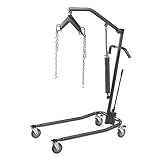 Drive Medical Hydraulic Patient Lift
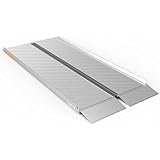 EZ-ACCESS Singlefold Wheelchair Ramp, 6 ft
 Drive Medical Nitro Rollator with Seat
 Vive Stand Assist Rail for Couch or Chair