How to Set Healthy Boundaries as a Caregiver
As a caregiver, the word "no" might feel impossible to say. You're caring for someone you love, and the natural instinct is to give everything you have. But here's the truth that many caregivers learn too late: without boundaries, you won't be able to sustain your caregiving role. You'll burn out, grow resentful, or become so depleted that you can't provide quality care. Setting boundaries isn't selfish, it's essential for both you and the person you're caring for.
This guide will help you understand why boundaries matter, identify where you need them, learn how to communicate them effectively, and manage the guilt that often accompanies saying no. Whether you're setting limits with your aging parent, siblings who don't help enough, or your own tendency to overextend, you'll find practical strategies to protect your well-being while continuing to provide compassionate care.
Gear that gives you a break
Burnout eases when the physical load eases. The equipment that most often takes daily strain off family caregivers, with our researched picks and Medicare coverage notes in each guide:
- Patient lifts, end the transfers that wreck caregiver backs
- Power wheelchairs, independence your parent controls, hours you get back
- Bathroom grab bars, fewer hovering-in-the-doorway showers
- Medical alert systems, coverage for the hours you cannot be there
Why Boundaries Matter for Caregivers
Boundaries are the limits you set to protect your physical, emotional, and mental well-being. They define what you're willing to do, when you're available, and what you need to function as a healthy person. For caregivers, boundaries are not optional luxuries, they're survival tools.
Boundaries Prevent Burnout
Caregiver burnout is a state of physical, emotional, and mental exhaustion that occurs when caregivers don't get the help they need or try to do more than they're capable of. Without boundaries, you're likely to take on too much, neglect your own needs, and eventually crash. Studies show that caregivers without boundaries experience significantly higher rates of depression, anxiety, and physical illness.
Boundaries Improve Care Quality
When you're exhausted, resentful, or overwhelmed, the care you provide suffers. You have less patience, make more mistakes, and lack the emotional presence your parent needs. By setting boundaries that protect your rest and well-being, you're actually improving the quality of care you can offer.
Boundaries Model Healthy Behavior
If you have children, siblings, or others watching your caregiving journey, your approach teaches them something. Martyring yourself without boundaries teaches that self-sacrifice to the point of destruction is expected. Setting healthy limits teaches that caring for others and caring for yourself can coexist.
Boundaries Preserve Relationships
Resentment destroys relationships. When you give beyond your capacity without limits, you're likely to become bitter toward your parent, siblings, or even yourself. Boundaries help you give from a place of genuine willingness rather than grudging obligation, preserving the love in your relationships.
Key Insight: Think of boundaries like the fence around a garden. The fence isn't there to keep people out, it's there to protect what's growing inside. Your boundaries protect your capacity to care.
Common Boundaries Caregivers Need
Every caregiver's situation is unique, but certain boundaries are almost universally needed. Here are the most common areas where caregivers need to set limits:
Time Boundaries
Time is your most finite resource. Time boundaries might include:
- Specific days and times you're available for caregiving
- Limits on phone calls outside those hours
- Protected time for your own medical appointments
- Non-negotiable personal time for rest and activities you enjoy
- Boundaries around work hours if you're also employed
Physical Boundaries
These protect your body and physical health:
- Tasks you're physically unable to do safely (lifting, transfers)
- Minimum sleep requirements that aren't compromised
- Limits on tasks that cause you pain or injury
- Boundary between caregiving tasks and intimate care that requires professionals
Emotional Boundaries
These protect your mental health and emotional well-being:
- Not accepting verbal abuse or manipulation
- Limiting exposure to constant negativity or complaints
- Refusing to be the target of a parent's displaced anger
- Not being the sole emotional support for everyone in the family
- Protecting yourself from guilt trips and emotional manipulation
Financial Boundaries
Caregiving often has financial implications that need limits:
- Clear understanding of who pays for what
- Limits on personal funds contributed to parent's care
- Boundaries around managing money versus gifts or loans
- Protecting your own retirement savings
Task Boundaries
Not every caregiving task needs to be done by you:
- Medical tasks that require training or certification
- Household tasks that can be hired out
- Tasks that other family members should share
- Errands versus essential care duties
Identifying Your Personal Limits
Before you can set boundaries, you need to know where your limits are. Many caregivers have been pushing past their limits for so long that they've lost touch with what they actually need.
Signs You Need Stronger Boundaries
If you experience any of these regularly, it's a signal that your boundaries need attention:
- Chronic exhaustion that sleep doesn't fix
- Resentment toward your parent or siblings
- Feeling trapped or suffocated by caregiving demands
- Neglecting your own health (skipping appointments, not exercising)
- Dreading visits or phone calls
- Snapping at people more than usual
- Feeling like you have no identity outside caregiving
- Physical symptoms like headaches, stomach issues, or insomnia
The Boundary Audit Exercise
Take some time to reflect on these questions:
- What tasks drain me the most? (Both physically and emotionally)
- When do I feel most resentful? (This often points to a boundary being violated)
- What would I change if I could? (Without guilt or consequences)
- What am I doing that someone else could do?
- What am I sacrificing that I deeply need? (Sleep, relationships, work, health)
- When do I feel most at peace? (This reveals what you need more of)
- What would "enough" caregiving look like? (If you had to define a limit)
Your Non-Negotiables
Identify 3-5 things that are absolutely essential for your well-being. These become your non-negotiable boundaries, the lines you won't cross no matter what. Examples might include:
- "I will sleep at least 6 hours a night"
- "I will not miss my own medical appointments"
- "I will have one full day off per week"
- "I will not tolerate verbal abuse"
- "I will maintain my job/income"
How to Set Boundaries Effectively
Knowing you need boundaries and actually communicating them are two different challenges. Here's a step-by-step approach to setting boundaries effectively:
Step 1: Get Clear on What You Need
Before communicating a boundary, be crystal clear about what you're asking for. Vague boundaries are easy to ignore or misinterpret. Instead of "I need more help," specify "I need someone else to handle Dad's Tuesday and Thursday doctor appointments."
Step 2: Choose the Right Time
Don't set boundaries in the heat of an argument or during a crisis. Choose a calm moment when you can think clearly and the other person is receptive. If you're constantly in crisis mode, schedule a specific time for the conversation.
Step 3: Use "I" Statements
Frame boundaries in terms of your needs, not accusations about others' behavior. This reduces defensiveness:
- Instead of: "You're always calling me and it's too much"
- Say: "I need our phone calls limited to once a day so I can manage my other responsibilities"
Step 4: Be Direct and Specific
State your boundary clearly without excessive apologizing or over-explaining. You don't need to justify your needs extensively or convince the other person that your boundary is valid. A boundary stated confidently is more likely to be respected.
Step 5: Offer Alternatives When Possible
When saying no, it often helps to offer what you can do instead. This shows you're not abandoning the person, just redirecting the request:
- "I can't come over tonight, but I can come Saturday afternoon."
- "I'm not able to handle the finances, but I can help you find a daily money manager."
Step 6: Follow Through
A boundary means nothing if it's not enforced. If you say you're unavailable after 8 PM, don't answer the phone at 9 PM "just this once" unless it's a genuine emergency. Inconsistent enforcement teaches others that your boundaries are negotiable.
Remember: You don't need permission to set boundaries. You don't need the other person to agree or understand. You're communicating your limits, not requesting approval.
Scripts and Phrases for Setting Boundaries
Sometimes the hardest part is finding the right words. Here are ready-to-use scripts for common caregiving boundary situations:
For Setting Time Limits
- "I'm available on [specific days/times]. For other times, we'll need to arrange alternative help."
- "I need to leave by [time] today. Let's prioritize what's most important to accomplish."
- "I can't talk right now. I'll call you back tomorrow at [time]."
- "I need this evening for my own family. I'll be back tomorrow."
For Declining Requests
- "I understand you'd like me to [request], but that's not something I'm able to do."
- "I'm not the right person for that task. Let me help you find someone who can."
- "I've thought about it, and I need to say no to this."
- "That doesn't work for me, but here's what I can offer instead..."
For Protecting Your Well-being
- "I need to take a break right now. I'll be back in [timeframe]."
- "I'm not able to continue this conversation when voices are raised. Let's talk when we're both calm."
- "My health appointment is non-negotiable. I'll arrange for [alternative] while I'm gone."
- "I love you, and I also need rest. Both things can be true."
For Responding to Guilt Trips
- "I understand you're disappointed. My answer is still no."
- "I'm doing the best I can within my limits."
- "Saying no to this allows me to say yes to the things that matter most."
- "I've given this careful thought. I'm confident in my decision."
For Involving Siblings
- "I need us to divide caregiving responsibilities more evenly. Here's what I'm proposing..."
- "This is more than I can handle alone. What can you take on?"
- "I'll continue handling [specific tasks], but I need you to take over [other tasks]."
- "If physical help isn't possible, I need financial support to hire additional care."
Setting Boundaries with Your Aging Parent
Setting boundaries with a parent can be particularly challenging. The power dynamic of your childhood may make it feel wrong to say no to them. Additionally, cognitive decline, chronic illness, or grief over their losses can complicate their reactions.
Understanding Their Perspective
Your parent is experiencing tremendous loss, independence, abilities, perhaps a spouse, their home, their sense of purpose. Their resistance to your boundaries may come from fear, grief, or a desperate attempt to maintain some control. Understanding this doesn't mean you abandon your boundaries, but it can help you approach them with compassion.
When Parents Push Back
Common pushback tactics include:
- Guilt trips: "After everything I did for you..."
- Comparisons: "Your sister would never treat me this way"
- Helplessness: "I guess I'll just sit here alone then"
- Anger: Accusations, criticism, or silent treatment
- Playing the victim: Telling others you're neglecting them
Staying Firm While Staying Kind
You can be compassionate and still hold your boundaries. Try these approaches:
- Acknowledge their feelings without changing your boundary: "I know you want me here every day. I understand that's hard. I'm still going to come Tuesdays and Thursdays."
- Redirect the conversation: "I've already answered that. Let's talk about something else."
- Offer empathy without solutions: "It sounds like you're feeling lonely. I'm sorry this is so difficult."
- End the conversation if it becomes abusive: "I'm going to go now. I'll talk to you tomorrow when things are calmer."
When Cognitive Decline is a Factor
If your parent has dementia or cognitive impairment, traditional boundary-setting may not work. They may not remember the boundary, understand the reasoning, or have the capacity to respect it. In these cases, boundaries become about managing the environment and your own behavior rather than expecting behavior change from your parent. You might need to limit visits to times you can handle, leave when you're overwhelmed, or arrange for professional care during times you can't be available.
Setting Boundaries with Siblings
One of the most common caregiver frustrations is siblings who don't carry their share of the caregiving load. Setting boundaries with siblings often means clearly defining what you will and won't do, regardless of their participation.
Having the Initial Conversation
Before resentment builds, have a direct conversation about dividing responsibilities:
- List all the caregiving tasks that need to be done
- Share what you're currently handling and what you can sustainably continue
- Ask each sibling what they can commit to
- Discuss hiring help for tasks no one can cover
- Set a follow-up date to evaluate how the arrangement is working
When Siblings Won't Help
You cannot force another adult to participate in caregiving. What you can do is:
- Be clear about what you will and won't do: "I'm handling X, Y, and Z. I'm not able to also do A, B, and C. Those tasks will need to be covered by someone else or hired out."
- Stop covering for them with your parent: If a sibling promises to call and doesn't, you don't need to make excuses for them.
- Request financial contribution if they can't contribute time: Helping pay for respite care, cleaning services, or meal delivery is a valid form of participation.
- Accept what you cannot change: Some siblings simply won't step up. Continuing to pour energy into changing them takes away from your own well-being.
Protecting Yourself from Family Criticism
Sometimes siblings who don't help are the quickest to criticize how you're handling things. Boundaries here might include:
- "I'm open to suggestions if you're willing to implement them yourself."
- "I've made this decision with the information I have. You're welcome to take over if you disagree."
- "I'm not going to discuss my caregiving decisions with you anymore. If you want to be involved in decisions, you need to be involved in the care."
Handling Resistance to Your Boundaries
When you start setting boundaries, expect some pushback. People who have benefited from your lack of limits won't immediately celebrate when you establish them.
Common Resistance Tactics
Testing the boundary
They push slightly past your limit to see if you'll enforce it.
Response: Calmly enforce the boundary every time. "As I said, I'm not available after 8 PM."
Escalating emotions
Crying, yelling, or silent treatment to pressure you into backing down.
Response: Acknowledge the emotion without changing your position. "I can see you're upset. My answer is still the same."
Involving others
Recruiting other family members or friends to pressure you.
Response: "I've made my decision. I'm not going to discuss it with everyone who asks."
Creating emergencies
Manufacturing crises to prove you're needed and your limits are wrong.
Response: Assess whether it's a genuine emergency. If not, respond as planned. "I understand you feel this is urgent. I'll be there at our scheduled time."
The Broken Record Technique
When facing persistent resistance, use the broken record technique: calmly repeat your boundary without getting drawn into arguments, justifications, or emotional reactions. You don't need new arguments or explanations each time, simply restate your position:
- "I understand. I'm still not available on Sundays."
- "I hear your concerns. I'm still going to take my vacation."
- "That may be true. I'm still not changing my decision."
When to Seek Outside Help
If boundary violations continue or escalate, consider bringing in a neutral third party:
- A family therapist or mediator for family conflicts
- A geriatric care manager who can help coordinate and communicate care plans
- A social worker who can advocate for appropriate care arrangements
- In cases of elder abuse or severe manipulation, adult protective services
Maintaining Boundaries Over Time
Setting a boundary once isn't enough. Maintaining boundaries requires ongoing attention and sometimes adjustment as circumstances change.
Regular Self-Check-ins
Schedule regular times (monthly or quarterly) to evaluate your boundaries:
- Are you honoring your own boundaries, or have you slipped?
- Have your needs or circumstances changed, requiring new boundaries?
- Are there new areas where you're feeling resentful or depleted?
- What's working well that you should continue?
Adjusting Boundaries as Needs Change
Boundaries aren't rigid forever. As your parent's condition changes, your own life circumstances shift, or new resources become available, your boundaries may need updating. This might mean:
- Increasing involvement if their needs increase and you have capacity
- Decreasing involvement if your health or circumstances change
- Shifting types of help (less physical care, more coordination)
- Adding new boundaries as new situations arise
Building a Support System
You're more likely to maintain boundaries when you have support. Surround yourself with people who respect and encourage your limits:
- Caregiver support groups where others understand your challenges
- A therapist who can help you process guilt and strengthen your resolve
- Friends or family members who validate your need for boundaries
- Professional caregivers who can cover when you're unavailable
Managing Guilt When You Set Boundaries
Guilt is an almost universal companion to boundary-setting for caregivers. You may logically know that boundaries are necessary while still feeling guilty every time you enforce one.
Why Boundaries Trigger Guilt
Guilt often stems from deeply held beliefs that boundaries mean you're:
- Being selfish or unkind
- Abandoning someone who depends on you
- Breaking implicit family rules about obligation
- Putting yourself before someone who "should" come first
- Failing at the caregiving role
Reframing Boundaries as Acts of Love
Try these perspective shifts:
- Boundaries allow you to continue caregiving instead of burning out
- A rested, healthy caregiver provides better care
- Modeling healthy limits teaches others it's okay to have needs
- Your parent wants you to be well, even if they resist your boundaries in the moment
- Sustainable care over years is better than unsustainable care that ends abruptly
Coping Strategies for Boundary Guilt
When guilt arises after setting a boundary:
- Acknowledge the guilt without acting on it: "I'm feeling guilty right now. That doesn't mean I did something wrong."
- Remind yourself of the why: Why did you set this boundary? What happens if you don't maintain it?
- Talk to someone who supports your boundary: Hearing validation from others can counteract guilt.
- Practice self-compassion: Treat yourself as kindly as you'd treat a friend in your situation.
- Give it time: Guilt often decreases as the new boundary becomes normal.
For more on managing caregiver guilt, see our comprehensive guide: How to Deal with Caregiver Guilt.
Affirmation: "Setting boundaries is not a sign that I love my parent less. It's a sign that I understand what I need to continue loving and caring for them well."
Frequently Asked Questions
Is it selfish to set boundaries as a caregiver?
No, setting boundaries is not selfish. Boundaries are essential for sustainable caregiving. Without them, you risk burnout, resentment, and ultimately providing lower-quality care. Think of boundaries like oxygen masks on an airplane, you must secure your own first to help others effectively.
How do I set boundaries with a parent who doesn't respect them?
Stay calm and consistent. Repeat your boundary without over-explaining or apologizing. Use "I" statements like "I'm available Tuesday and Thursday evenings." If boundaries continue to be violated, reduce contact temporarily and consider involving a family mediator or therapist.
What boundaries should every caregiver have?
Essential caregiver boundaries include: dedicated personal time that's non-negotiable, clear visiting or availability schedules, limits on financial support, protection of your own health appointments and sleep, and boundaries around tasks you're willing to perform versus those requiring professional help.
How do I handle guilt when enforcing boundaries?
Guilt is a normal response but doesn't mean you're doing something wrong. Remind yourself that boundaries enable better care long-term. Practice self-compassion and remember that your needs matter too. If guilt is overwhelming, consider speaking with a therapist who specializes in caregiver issues.
How do I set boundaries with siblings who don't help with caregiving?
Have a direct conversation about dividing responsibilities. Be specific about what you need: "I need you to take Mom to doctor appointments on Wednesdays." If they can't help physically, discuss financial contributions or other support. Accept that you cannot force participation, but you can set limits on what you'll do alone.
Your Boundaries, Your Caregiving Journey
Setting boundaries as a caregiver is one of the most challenging aspects of the role. It requires you to prioritize your own needs alongside your parent's, to disappoint people you love, and to tolerate the discomfort of others' reactions. None of this is easy.
But the alternative, caregiving without limits until you collapse, isn't sustainable or loving for anyone involved. Boundaries allow you to show up as your best self, to give from genuine willingness rather than resentful obligation, and to maintain the capacity to care for years rather than months.
Remember that boundary-setting is a skill that improves with practice. Your first attempts might feel awkward or provoke strong reactions. But as you consistently enforce your limits and experience the benefits of protected time and energy, it becomes easier. You're not just setting boundaries for yourself, you're modeling healthy self-care for your children, your siblings, and even your parent.
You deserve rest. You deserve a life outside caregiving. You deserve relationships that aren't defined solely by what you can do for others. Setting boundaries isn't selfish, it's a necessary act of self-preservation that ultimately makes you a more effective, compassionate caregiver.
"Daring to set boundaries is about having the courage to love ourselves even when we risk disappointing others.", Brené Brown
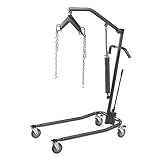 Drive Medical Hydraulic Patient Lift
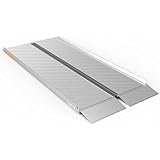 EZ-ACCESS Singlefold Wheelchair Ramp, 6 ft
 Drive Medical Nitro Rollator with Seat
 Vive Stand Assist Rail for Couch or Chair