Levels of Care for Seniors: A Comparison Chart
From least to most support: independent living, in-home care, assisted living, memory care, and skilled nursing (nursing home). A continuing care retirement community (CCRC) combines several levels on one campus. As of 2026, typical US median costs run roughly $5,300/month for assisted living and $9,000 to $10,000+/month for a private nursing-home room, with in-home care around $33 to $35 per hour.
Choosing the right level of care comes down to how much help your parent needs with daily activities, whether they have memory loss, and how much skilled medical care is required. This chart compares the main options side by side.
| Option | Typical 2026 cost | Best for | Medical care | Pays with |
|---|---|---|---|---|
| In-home care | $33 to $35/hr | Staying at home with help for some daily tasks | Non-medical aide; home health is separate | Private pay, LTC insurance, some Medicaid/VA |
| Independent living | $3,000 to $4,000/mo | Active seniors wanting community, no daily help | None included | Private pay |
| Assisted living | ~$5,300/mo median | Help with bathing, dressing, meds, meals | Limited; staff assist, not skilled nursing | Private pay, LTC insurance, some Medicaid waivers |
| Memory care | $6,000 to $8,000+/mo | Dementia or Alzheimer's needing secure setting | Specialized dementia staff | Private pay, LTC insurance, some Medicaid waivers |
| Nursing home | $9,000 to $10,500+/mo | 24-hour skilled medical and personal care | Skilled nursing, rehab, full medical | Medicaid (most common), Medicare (short rehab only), private pay |
| CCRC | Entry fee + monthly | Aging in place across levels on one campus | Varies by level | Entry fee + private pay/insurance |
How to choose the right level
Start with an honest assessment of the activities of daily living (ADLs) your parent struggles with, such as bathing, dressing, eating, toileting, transferring, and continence. Light help with a few tasks often points to in-home care or assisted living, while a dementia diagnosis with wandering or safety risk points to memory care. When a parent needs daily skilled medical care or two-person transfers, a nursing home is usually the safe choice. A geriatric care manager or hospital discharge planner can help match needs to setting.
For a full breakdown of what each setting costs in your state, see the cost of senior care by state chart, and to understand who pays, see the Medicare, Medicaid, and VA benefits comparison.
The equipment that changes the most
Most of what caregiving costs is time. These four are the purchases that reliably buy some of it back, and they are the ones families tell us they wish they had bought sooner.
 Drive Medical Hydraulic Patient Lift
A full lift is what makes one person able to manage a transfer alone. It is the single purchase that most often delays a move into residential care.
Check price on Amazon →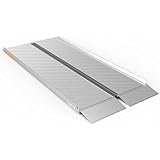 EZ-ACCESS Singlefold Wheelchair Ramp, 6 ft
Folds like a suitcase and carries in a car boot, so the same ramp handles the front step at home and the kerb at an appointment.
Check price on Amazon → Drive Medical Nitro Rollator with Seat
The seat matters more than the wheels. Being able to stop and rest is what decides whether someone still goes out at all.
Check price on Amazon → Vive Stand Assist Rail for Couch or Chair
Getting out of a low sofa is where most falls at home start. This is the cheapest thing on the list and often the first one needed.
Check price on Amazon →As an Amazon Associate we earn from qualifying purchases, at no extra cost to you. Researched guidance, not medical advice. Prices change, so check before buying.
Frequently Asked Questions
What is the difference between assisted living and a nursing home?
Assisted living provides help with daily activities like bathing, dressing, medication reminders, and meals in a residential setting, but it does not provide around-the-clock skilled medical care. A nursing home (skilled nursing facility) provides 24-hour licensed nursing, rehabilitation, and care for complex medical needs. Assisted living suits a parent who is fairly stable but needs daily help, while a nursing home suits someone needing constant medical supervision.
What is the cheapest level of senior care?
Independent living and part-time in-home care are usually the least expensive options because they include the least hands-on support. Independent living averages $3,000 to $4,000 per month, and a few hours of in-home help per week can cost far less than full-time residential care. Costs rise quickly as the amount of daily and medical support increases.
Does Medicare pay for assisted living or nursing homes?
Medicare does not pay for long-term assisted living or long-term nursing-home (custodial) care. Medicare Part A covers only short-term skilled nursing or rehab after a qualifying hospital stay, generally up to 100 days with cost-sharing after day 20. Long-term residential care is paid through Medicaid, long-term care insurance, veterans benefits, or private funds.
What is a CCRC?
A continuing care retirement community (CCRC), also called a life plan community, offers independent living, assisted living, and skilled nursing on a single campus. Residents typically pay an entry fee plus a monthly fee and can move between levels of care as their needs change without relocating to a new community. It appeals to people who want to age in place with predictable access to higher care.