Dementia Stages Chart (7-Stage GDS Scale)
The Global Deterioration Scale (GDS) describes 7 stages of dementia, from Stage 1 (no impairment) to Stage 7 (very severe decline). Stages 1 to 3 are pre-dementia, Stage 4 is mild (early) dementia, Stage 5 is moderate, and Stages 6 to 7 are severe (late) dementia when full-time care is needed. The full course commonly spans 4 to 10+ years.
This chart summarizes the widely used GDS (Reisberg) staging. Real people do not move through stages on a fixed schedule, and symptoms overlap, but the framework helps families anticipate needs and plan care.
| Stage | Level | What you may see | Care needed |
|---|---|---|---|
| 1 | No impairment | No memory problems | None |
| 2 | Very mild (normal aging) | Misplacing items, forgetting names | None |
| 3 | Mild decline (MCI) | Word-finding trouble, getting lost, work issues | Light support, monitoring |
| 4 | Moderate (early dementia) | Trouble with finances, recent events, complex tasks | Help with IADLs, supervision |
| 5 | Moderately severe | Needs help choosing clothes, may forget address/phone | Daily help, cannot live alone safely |
| 6 | Severe (middle/late) | Help with bathing, toileting; incontinence; agitation, wandering | Extensive hands-on care, memory care |
| 7 | Very severe (late) | Loss of speech, mobility, swallowing | Total care, often hospice |
Early, middle, and late in plain terms
Clinicians often group the stages into three: early (GDS 4), middle (GDS 5 to 6), and late (GDS 7). In the early stage, a parent can still do much on their own but needs help with complex tasks and should stop driving and managing finances alone. The middle stage is usually the longest and most demanding, when help with bathing, dressing, and toileting begins and behaviors like wandering and sundowning appear. In the late stage, the person needs total care and hospice support is often appropriate. For a deeper walkthrough, see the dementia stages guide, and for safety steps, see dementia home safety.
The equipment that changes the most
Most of what caregiving costs is time. These four are the purchases that reliably buy some of it back, and they are the ones families tell us they wish they had bought sooner.
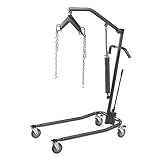 Drive Medical Hydraulic Patient Lift
A full lift is what makes one person able to manage a transfer alone. It is the single purchase that most often delays a move into residential care.
Check price on Amazon →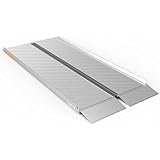 EZ-ACCESS Singlefold Wheelchair Ramp, 6 ft
Folds like a suitcase and carries in a car boot, so the same ramp handles the front step at home and the kerb at an appointment.
Check price on Amazon → Drive Medical Nitro Rollator with Seat
The seat matters more than the wheels. Being able to stop and rest is what decides whether someone still goes out at all.
Check price on Amazon → Vive Stand Assist Rail for Couch or Chair
Getting out of a low sofa is where most falls at home start. This is the cheapest thing on the list and often the first one needed.
Check price on Amazon →As an Amazon Associate we earn from qualifying purchases, at no extra cost to you. Researched guidance, not medical advice. Prices change, so check before buying.
Frequently Asked Questions
How long do the stages of dementia last?
It varies by person and dementia type, but the full course commonly spans 4 to 10 or more years. The middle stage (GDS 5 to 6) is usually the longest, often lasting 2 to 4 years, while the late stage may last 1 to 3 years. Vascular dementia can progress in a stepwise way, and Alzheimer's tends to progress more gradually.
What are the 7 stages of dementia?
On the Global Deterioration Scale they are: Stage 1 no impairment, Stage 2 very mild decline (normal aging), Stage 3 mild decline (often mild cognitive impairment), Stage 4 moderate decline (early dementia), Stage 5 moderately severe decline, Stage 6 severe decline, and Stage 7 very severe decline. Stages 4 through 7 represent diagnosed dementia of increasing severity.
What stage of dementia needs 24-hour care?
Around-the-clock care is typically needed in Stage 6 and Stage 7, when a person needs hands-on help with bathing, dressing, toileting, and eventually all daily activities, and when wandering or safety risks make it unsafe to be alone. Many families transition to memory care or full-time in-home care during the middle-to-late stages.
Is the GDS the same as the FAST scale?
They are related staging tools by the same researcher (Dr. Barry Reisberg). The GDS describes overall cognitive decline in 7 stages, while the FAST (Functional Assessment Staging Tool) focuses on functional abilities and breaks the later stages into more detailed substages. Hospice often uses FAST Stage 7 criteria to assess eligibility in advanced dementia.