Lift Chair vs Recliner: Which Is Right for an Elderly Parent?
A lift chair looks almost identical to a recliner, but a motor under the seat tilts the whole chair forward to gently help your parent stand. The question is whether that powered boost is worth the higher price, or whether a comfortable standard recliner will do the job. This guide explains who genuinely benefits from a lift chair, what Medicare will and won't pay for, and how to decide.
Choose a lift chair if your parent struggles to stand from a seated position on their own, especially due to arthritis, weak legs, or balance problems, because the powered seat does the hard part of getting up. Choose a standard recliner if they can rise from a chair safely without help and simply want comfort and the ability to put their feet up. The deciding factor is the act of standing up, not how the chair feels once they are seated.
Choose a Lift Chair when…
- Your parent can't reliably stand up from a normal chair without pushing off, help, or a struggle
- Severe hip or knee arthritis or muscle weakness makes rising painful or unsafe
- They have lost balance or nearly fallen while getting out of a chair
- A doctor can document medical necessity so Medicare helps cover the lift motor
Choose a Standard Recliner when…
- Your parent can stand from a seated position safely on their own
- The main goal is comfort, reclining, and elevating the legs, not help getting up
- Budget is tight and you don't want to pay for a powered lift mechanism
- They prefer a lighter, simpler chair with no motor or wall outlet required
Side-by-Side Comparison
| Factor | Lift Chair | Standard Recliner |
|---|---|---|
| Cost | $300-$1,500+ for a powered lift recliner | $200-$1,000+; generally less than a comparable lift model |
| Helps with standing up | Yes; the motor tilts the seat forward to lift your parent toward standing | No; your parent must rise under their own strength |
| Power required | Plugs into a wall outlet; battery backup on better models | None for manual recliners (some power-recline models plug in) |
| Fall-risk reduction | High; removes the hardest, riskiest moment of getting up | Low; standing is unassisted |
| Medicare help | Part B may cover ~80% of the seat-lift mechanism if medically necessary | Not covered |
| Best for | Weak legs, severe arthritis, trouble or unsafe standing | Independent standers who want comfort and recline |
| Comfort and recline | Full recline plus powered positioning, often heat and massage options | Full recline and footrest; comfort comparable when seated |
The equipment that changes the most
Most of what caregiving costs is time. These four are the purchases that reliably buy some of it back, and they are the ones families tell us they wish they had bought sooner.
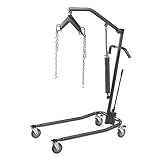 Drive Medical Hydraulic Patient Lift
A full lift is what makes one person able to manage a transfer alone. It is the single purchase that most often delays a move into residential care.
Check price on Amazon →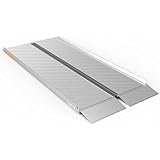 EZ-ACCESS Singlefold Wheelchair Ramp, 6 ft
Folds like a suitcase and carries in a car boot, so the same ramp handles the front step at home and the kerb at an appointment.
Check price on Amazon → Drive Medical Nitro Rollator with Seat
The seat matters more than the wheels. Being able to stop and rest is what decides whether someone still goes out at all.
Check price on Amazon → Vive Stand Assist Rail for Couch or Chair
Getting out of a low sofa is where most falls at home start. This is the cheapest thing on the list and often the first one needed.
Check price on Amazon →As an Amazon Associate we earn from qualifying purchases, at no extra cost to you. Researched guidance, not medical advice. Prices change, so check before buying.
What a lift chair does that a recliner can't
From the outside, a lift chair looks like an ordinary recliner, but it has a motorized lift mechanism hidden under the seat. At the press of a button, the entire chair tilts forward and rises, easing your parent up toward a standing position so they do not have to push themselves out of a deep seat. That single function is the whole point. Getting up from a low, soft chair is one of the most physically demanding and fall-prone movements in an older adult's day. If your parent grunts, struggles, rocks to build momentum, or needs a hand to stand, a lift chair directly solves that. A recliner, by contrast, only reclines and elevates the feet; it offers no help with the act of standing. If your parent can no longer bear weight or stand even with a powered seat, a lift chair is not enough and you will need a full-body transfer lift instead: see our guide to the best patient lifts for home.
When a standard recliner is the smarter buy
Not everyone needs a lift chair, and paying for a motor your parent does not use is wasteful. If your parent can stand from a normal chair safely and confidently, a quality recliner delivers the same comfort, the same leg elevation, and the same nap-friendly recline for less money and with no wires or wall outlet. Recliners are also lighter and easier to move, and they avoid the small risk of a motor failing over time. The honest test is simple: watch your parent stand up from their current chair a few times. If they can do it without strain, help, or wobbling, the lift feature is a luxury rather than a need.
Does Medicare cover a lift chair?
This is the most misunderstood part of the decision. Medicare Part B can cover the seat-lift mechanism, the motor and lifting device, as durable medical equipment, but it never pays for the chair, upholstery, or comfort features. In practice Medicare pays roughly 80% of the approved cost of the lift mechanism after your parent meets the Part B deductible, and you pay the rest plus the entire cost of the chair portion. To qualify, your parent generally must have severe arthritis of the hip or knee or a severe neuromuscular disease, be unable to stand from a regular chair, and still be able to walk once upright. A doctor's prescription and a Certificate of Medical Necessity are required, and you must buy from a Medicare-enrolled supplier.
What to look for when you buy
If you choose a lift chair, match the size to your parent's height and weight; a chair that is too tall or too deep undoes the safety benefit. Consider how far it reclines: two-position chairs recline partway, while infinite-position or zero-gravity models lay nearly flat for sleeping and better circulation. Look for a battery backup so the chair still lifts during a power outage, and choose easy-clean fabric if incontinence or spills are a concern. For a standard recliner, prioritize a firm, supportive seat with a higher seat height, which makes standing easier even without a motor.
Frequently Asked Questions
No. Medicare Part B only helps with the motorized seat-lift mechanism, not the chair itself. It typically covers about 80% of the approved cost of the lift mechanism after the Part B deductible, and you are responsible for the remaining 20% plus the full cost of the chair, fabric, and any extras like heat or massage.
Watch them stand up from a regular chair several times. If they push hard off the armrests, rock to gain momentum, need someone's hand, or look unsteady once up, a lift chair will genuinely help and may prevent a fall. If they rise smoothly on their own, a standard recliner is enough.
Yes, lift chairs are designed to stay plugged into a wall outlet for everyday use. Better models also include a battery backup so the chair can still lower or lift your parent during a power outage. Just keep the cord routed safely so it is not a trip hazard.
Quality lift chairs are engineered to raise and lower smoothly and are very stable when used correctly. The main risks come from choosing a chair that does not fit the user's size or from a parent trying to stand before the seat finishes tilting. Picking the right size and teaching proper use eliminates most concerns.
No. A power recliner uses a motor to recline the back and raise the footrest, but it does not tilt the seat forward to help you stand. A lift chair is defined specifically by that forward-tilting seat-lift function. If standing up is the problem, you need a lift chair, not just a power recliner.
Reviews of this equipment
We reviewed the individual products behind this comparison, including what each one does badly and who should not buy it. Most of this equipment should be specified by an occupational or physical therapist before it is bought.
- Signature Design by Ashley power lift recliner review, ~$2,136
- Golden Comforter lift chair PR535M review, ~$1,749