Get Paid to Care for Your Elderly Parent in South Carolina
South Carolina's Community Choices (CC) Waiver, administered through Community Long Term Care, offers a participant-directed option that lets a participant hire an adult child or other relative as a paid caregiver, with a financial management agency handling payroll. Spouses cannot be paid for companion care.
This guide covers what South Carolina family caregivers need to know: the program structure, pay rates, who can be paid, eligibility, how to apply, and other programs that may supplement your income.
South Carolina pays family caregivers $11–$15 per hour through the Community Choices Waiver, Participant-Directed Care option within the Community Choices (CC) Waiver. Your parent must meet a nursing-facility level of care but prefer to remain at home.
South Carolina's Main Program: Community Choices Waiver, Participant-Directed Care
Community Choices Waiver, Participant-Directed Care is a self-directed option within South Carolina's Community Choices (CC) Waiver, which provides home and community-based care for seniors and adults with disabilities who meet a nursing-facility level of need. Under self-direction, your parent (or you as their authorized representative) can hire, train, schedule, and supervise the personal-care attendant, and that attendant can be you, an adult child.
What the Program Pays For
Authorized self-directed services typically include:
- Personal care: bathing, grooming, dressing, oral hygiene
- Toileting assistance and incontinence care
- Mobility help: transferring, positioning, ambulation support
- Meal preparation and feeding assistance
- Light housekeeping directly related to health and safety
- Medication reminders (not administration, which requires a nurse)
- Supervision for individuals with cognitive impairment, including dementia
Pay Rates Across South Carolina
| Region | Typical Hourly Rate | Notes |
|---|---|---|
| Columbia / Midlands | $11–$15/hr | Participant-directed care managed via a Community Long Term Care office |
| Charleston / Lowcountry | $11–$15/hr | Adult child or relative hired through a financial management agency |
| Greenville / Upstate | $11–$14/hr | Rate depends on the participant's approved care budget |
Rates are set within the participant's approved plan-of-care budget and the state's limits; the figures above are typical ranges, not guarantees.
The equipment that changes the most
Most of what caregiving costs is time. These four are the purchases that reliably buy some of it back, and they are the ones families tell us they wish they had bought sooner.
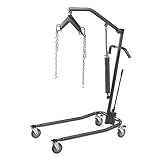 Drive Medical Hydraulic Patient Lift
A full lift is what makes one person able to manage a transfer alone. It is the single purchase that most often delays a move into residential care.
Check price on Amazon → EZ-ACCESS Singlefold Wheelchair Ramp, 6 ft
Folds like a suitcase and carries in a car boot, so the same ramp handles the front step at home and the kerb at an appointment.
Check price on Amazon → Drive Medical Nitro Rollator with Seat
The seat matters more than the wheels. Being able to stop and rest is what decides whether someone still goes out at all.
Check price on Amazon → Vive Stand Assist Rail for Couch or Chair
Getting out of a low sofa is where most falls at home start. This is the cheapest thing on the list and often the first one needed.
Check price on Amazon →As an Amazon Associate we earn from qualifying purchases, at no extra cost to you. Researched guidance, not medical advice. Prices change, so check before buying.
Who Can Be Paid
Adult children and other relatives can be hired and paid; a spouse cannot be paid for companion care (a spouse may provide attendant care). Always confirm the current rules with South Carolina Department of Health and Human Services (Healthy Connections Medicaid) before you count on a specific arrangement.
Eligibility Requirements
Your Parent Must:
- Be enrolled in full South Carolina Medicaid (not just a savings program)
- Meet the clinical criteria for a nursing-facility level of care
- Be enrolled in the Community Choices (CC) Waiver (or its self-directed option)
- Live in South Carolina in a community setting (not a nursing home)
- Be able to direct their own care, or have a legal/authorized representative who can
You (the Caregiver) Must:
- Be 18 years of age or older
- Meet the program's relationship rules (see above)
- Pass a criminal background check and registry search
- Complete any required caregiver orientation and training
- Be legally authorized to work in the United States
- Submit timesheets through a financial management services agency
How to Apply: Step-by-Step
- Apply for South Carolina Medicaid. Apply online at apply.scdhhs.gov or call 1-888-549-0820. Your parent must meet income and asset limits.
- Request a long-term-services assessment. Contact your local Medicaid or aging office to request a comprehensive functional assessment that determines whether your parent qualifies for the Community Choices (CC) Waiver.
- Enroll in the waiver. Once deemed eligible, your parent is enrolled in the Community Choices (CC) Waiver and assigned a case manager or care coordinator.
- Request the self-directed (CC Waiver) option. During care planning, ask specifically for the consumer/self-directed service model and state that you, the adult child, want to be the hired caregiver.
- Enroll with a financial management services agency. Complete enrollment paperwork, W-4, I-9, and background authorization, so payroll, tax withholding, and timesheets are handled for you.
- Complete orientation. Finish any state-required caregiver orientation covering personal-care techniques, emergency procedures, and reporting.
- Begin care and submit timesheets. Provide care per the authorized plan and submit electronic timesheets; payroll is processed on a regular cycle with taxes withheld.
Check Your Parent's Eligibility
Our free Benefits Checker helps identify whether your parent qualifies for South Carolina's caregiver-pay programs and other benefits.
Check Eligibility NowOther Programs That May Pay South Carolina Family Caregivers
VA Veteran-Directed Care & PCAFC
If your parent is a veteran enrolled in VA healthcare, the Veteran-Directed Care program provides a monthly budget that can pay family caregivers, and the Program of Comprehensive Assistance for Family Caregivers (PCAFC) offers a monthly stipend for eligible primary caregivers. Contact the caregiver support coordinator at your parent's VA medical center or call 1-855-260-3274.
Personal Care Agreement (Private Pay)
If your parent does not qualify for Medicaid, a formal written Personal Care Agreement lets them pay you from their own funds at fair-market rates. Drafted with an elder-law attorney, it must be prospective and reasonable, and it keeps payments from being treated as "gifts" during the Medicaid 5-year look-back.
State Respite & Caregiver Support
Through the National Family Caregiver Support Program, South Carolina's Area Agencies on Aging fund respite, training, and counseling. These rarely pay ongoing wages but reduce your out-of-pocket costs. Find your local agency through the Eldercare Locator (1-800-677-1116) or 1-800-868-9095.
Tax Implications for Family Caregivers
- W-2 wages: The financial management agency issues you a W-2; federal income tax, Social Security, and Medicare are withheld.
- IRS Notice 2014-7: If you live in the same home as your parent (the Medicaid waiver participant), your self-directed wages may be excludable from federal gross income. Consult a CPA before filing, see IRS guidance on Medicaid waiver payments.
- Earned Income Tax Credit: These wages count as earned income and may qualify you for the EITC.
Maintain daily logs of services provided, date, time in, time out, and a brief description. Medicaid audits self-directed arrangements, and accurate records protect both you and your parent.
What South Carolina Caregivers Are Actually Earning
At 30 hours per week and about $13 per hour, you would earn roughly $1,690 per month. At 40 hours per week and $15 per hour, earnings reach about $2,600 per month, around $31,200 per year before taxes.
For comparison, a nursing home costs far more per year, and agency home care runs roughly $30–$40 per hour. A self-directed arrangement lets your parent receive care from someone they trust, while you earn income that partially replaces what you may have given up to provide care.
Contact Information
- South Carolina Department of Health and Human Services (Healthy Connections Medicaid): www.scdhhs.gov | 1-888-549-0820
- Apply for Medicaid: apply.scdhhs.gov
- State aging services: aging.sc.gov | 1-800-868-9095
- Eldercare Locator (find local help): eldercare.acl.gov | 1-800-677-1116
- Medicaid (federal): medicaid.gov
Frequently Asked Questions
Under the Community Choices Waiver's participant-directed option, family caregivers are typically paid about $11–$15 per hour, depending on the approved budget and negotiated rate; total monthly pay commonly runs up to roughly $2,400.
The Community Choices (CC) Waiver is South Carolina's Medicaid HCBS waiver for the frail elderly and adults with physical disabilities who meet a nursing-facility level of care, with a participant-directed option for hiring caregivers.
A spouse cannot be paid for companion care under the Community Choices Waiver, though a spouse may be hired to provide attendant care; adult children and other relatives can be paid caregivers.
The Community Choices (CC) Waiver, run through Community Long Term Care (CLTC), lets family members such as adult children be paid through its participant-directed personal and attendant care services.
Contact your local Community Long Term Care (CLTC) office or call SCDHHS Healthy Connections at 1-888-549-0820, and apply for Medicaid online at apply.scdhhs.gov.
Yes. A parent with dementia who qualifies for the Community Choices Waiver at a nursing-facility level of care can use the participant-directed option to hire an adult child as a paid caregiver.
Related Guides
- How to Get Paid to Care for Your Parent (National Overview)
- How to Apply for Medicaid for an Elderly Parent
- Caregiver Tax Deductions 2026
- VA Benefits for Elderly Parents
- Power of Attorney for an Elderly Parent
- Medicaid Spend-Down Rules
This guide is general information, not legal or financial advice. Program names, pay rates, and eligibility rules change and vary by county, confirm details with South Carolina Department of Health and Human Services (Healthy Connections Medicaid). Sources: www.scdhhs.gov · aging.sc.gov.