Get Paid to Care for Your Elderly Parent in Ohio
Yes, Ohio pays family caregivers $12–$16/hour through the PASSPORT Medicaid Waiver. Your parent must be at least 60, qualify for Medicaid, and need a nursing-facility level of care. If they qualify, you can enroll as their paid caregiver through a local Area Agency on Aging.
Ohio's PASSPORT program, Provider Assurance/Service Standards, Safety, Quality, and Reform, is one of the most established paid family caregiver programs in the Midwest. Administered through the Ohio Department of Medicaid and a network of Area Agencies on Aging, PASSPORT supports tens of thousands of older Ohioans who prefer to stay in their own homes rather than move to nursing facilities.
If you are already helping your parent with bathing, meals, medication reminders, or household tasks, PASSPORT can convert that unpaid work into real income, while keeping your parent in the home and community they know.
What Is the PASSPORT Medicaid Waiver?
PASSPORT is Ohio's primary Medicaid Home and Community-Based Services (HCBS) waiver for older adults. It provides an alternative to nursing home placement for Ohioans age 60 and older who would otherwise require institutional care. The program gives recipients a person-centered service plan, including an authorized number of care hours, which they can use to hire a caregiver, including a family member.
PASSPORT covers a wide range of services your parent may already need:
- Personal care: bathing, dressing, grooming, toileting, and hygiene assistance
- Homemaker services: meal preparation, laundry, light housekeeping, and grocery shopping
- Medication management assistance and reminders
- Transportation to medical appointments and community activities
- Adult day services at licensed centers
- Respite care to give family caregivers a break
- Home modification for safety and accessibility
PASSPORT is designed for adults age 60 and older. If your parent is under 60 with a physical disability, the Ohio Home Care Waiver covers similar personal care and homemaker services and also allows family members to be paid as caregivers. The application process is the same, through Ohio Medicaid and the local Area Agency on Aging.
The equipment that changes the most
Most of what caregiving costs is time. These four are the purchases that reliably buy some of it back, and they are the ones families tell us they wish they had bought sooner.
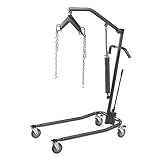 Drive Medical Hydraulic Patient Lift
A full lift is what makes one person able to manage a transfer alone. It is the single purchase that most often delays a move into residential care.
Check price on Amazon →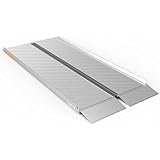 EZ-ACCESS Singlefold Wheelchair Ramp, 6 ft
Folds like a suitcase and carries in a car boot, so the same ramp handles the front step at home and the kerb at an appointment.
Check price on Amazon → Drive Medical Nitro Rollator with Seat
The seat matters more than the wheels. Being able to stop and rest is what decides whether someone still goes out at all.
Check price on Amazon → Vive Stand Assist Rail for Couch or Chair
Getting out of a low sofa is where most falls at home start. This is the cheapest thing on the list and often the first one needed.
Check price on Amazon →As an Amazon Associate we earn from qualifying purchases, at no extra cost to you. Researched guidance, not medical advice. Prices change, so check before buying.
Does Your Parent Qualify for PASSPORT?
Your parent must meet three requirements to qualify for the PASSPORT program:
1. Ohio Medicaid Eligibility
Your parent must be enrolled in Ohio Medicaid (the state's version of Medicaid, sometimes called "Ohio Medicaid" or "CareSource/Buckeye/Molina" through a managed care plan). In 2026, a single adult must generally have income at or below 100% of the Federal Poverty Level and countable assets below $2,000 to qualify for full Medicaid. Ohio uses an income-based eligibility model and does not have a spend-down pathway for waiver programs in most situations.
If your parent owns a home, the home is typically excluded from the asset calculation. Consult an Ohio elder law attorney if asset levels are a concern, Medicaid planning strategies may be available.
2. Age 60 or Older
PASSPORT is specifically for older adults. Your parent must be at least 60 years old to enroll. There is no upper age limit.
3. Nursing Facility Level of Care
An Area Agency on Aging care manager conducts a needs assessment to determine whether your parent requires the level of care typically provided in a nursing facility. This means they must need substantial assistance with activities of daily living, such as bathing, dressing, mobility, eating, or continence care, due to a chronic physical or cognitive condition.
Many families assume their parent will not qualify because they seem to manage with some help. The nursing-facility level of care standard does not require total dependence, moderate functional limitations can meet the threshold. The needs assessment is the definitive determination, and it is free to request.
How Much Can You Get Paid?
PASSPORT pay rates for personal care and homemaker services provided by family caregivers typically range from $12 to $16 per hour in Ohio. Rates vary slightly by region and by the specific services delivered. A caregiver authorized to provide 80 hours per month at $14/hr generates approximately $1,120/month in income.
- Personal care (bathing, dressing, hygiene): approximately $13–$16/hr
- Homemaker services (meals, laundry, cleaning): approximately $12–$14/hr
- Combined care plans: rate depends on the mix of service categories authorized
Hours are set by the care manager's assessment and your parent's individual service plan. Reassessments occur annually or when your parent's condition changes significantly, an increase in care needs can result in additional authorized hours.
Ohio PASSPORT generally does not allow spouses or legally responsible relatives to be paid as caregivers in the same household. Adult children who do not live with the parent, or who live in the household, may qualify depending on the specific waiver rules and fiscal intermediary. Confirm the rules for your family situation through your local Area Agency on Aging before applying.
How to Apply: Step-by-Step
-
Apply for Ohio Medicaid (if not already enrolled)
Your parent can apply for Ohio Medicaid online through benefits.ohio.gov, at a county Department of Job and Family Services (DJFS) office, or by calling 1-800-324-8680. Gather proof of income, identity, Ohio residency, and asset documentation. Processing takes up to 45 days. -
Contact Your Local Area Agency on Aging
Once Medicaid is confirmed, contact the Area Agency on Aging serving your parent's county to request a PASSPORT screening. Ohio has 12 Area Agencies on Aging. You can find yours through the Ohio Association of Area Agencies on Aging at o4a.org or by calling the Ohio Senior Health Insurance Information Program at 1-800-686-1578. -
Level of Care Assessment
A care manager from the Area Agency on Aging schedules an in-home visit. They evaluate your parent's functional limitations using a standardized tool and determine whether they meet the nursing-facility level of care. Be present for this visit and describe your parent's needs accurately and completely, do not minimize their limitations. -
Develop the Individual Service Plan
If your parent qualifies, the care manager works with your family to develop a person-centered Individual Service Plan (ISP) that identifies the services needed, the number of authorized hours, and who will deliver those services. This is when you request to be designated as the paid caregiver. -
Select a Fiscal Intermediary
PASSPORT uses a self-directed care model where your parent (or you as their representative) selects a fiscal intermediary (FI), an agency that handles employer paperwork, payroll, and tax withholding on your parent's behalf. The care manager will give you a list of approved fiscal intermediaries in your area. -
Complete Provider Enrollment
You complete enrollment paperwork through the fiscal intermediary, which includes provider applications, a background check through the Ohio BCI, and required orientation training. This process typically takes 2–4 weeks. -
Begin Submitting Timesheets
Once enrolled, you submit timesheets to the fiscal intermediary, either electronically through an online portal or by phone through an Electronic Visit Verification (EVV) system. Ohio requires EVV for PASSPORT personal care services. Payments are typically issued every two weeks via direct deposit or check.
Other Programs for Ohio Caregivers
VA Veteran-Directed Care
If your parent is a veteran enrolled in VA healthcare, Ohio VA medical centers in Cleveland, Columbus, Cincinnati, and Dayton participate in the Veteran-Directed Care program. Your veteran parent receives a monthly flexible budget, typically $2,000 to $4,000 based on care needs, to hire you as their paid caregiver. VA Veteran-Directed Care benefits are separate from and in addition to PASSPORT or Medicaid benefits.
MyCare Ohio (Integrated Care)
MyCare Ohio is an integrated care program for individuals who qualify for both Medicare and Medicaid (dual-eligibles). It operates in eight Ohio counties and coordinates physical health, behavioral health, and long-term services through a managed care plan. If your parent is enrolled in MyCare Ohio, their managed care plan may provide additional home care services on top of PASSPORT benefits.
Ohio Home Care Waiver
For parents under age 60 with physical disabilities, the Ohio Home Care Waiver covers similar personal care and homemaker services. Adult family members can be paid caregivers under this waiver using the same self-directed model as PASSPORT. Contact the Ohio Department of Medicaid at medicaid.ohio.gov for current enrollment information.
Personal Care Agreement (Private Pay)
If your parent does not qualify for Medicaid, they can pay you directly through a written Personal Care Agreement at a fair market rate. This formal arrangement documents the caregiving relationship for legal and estate purposes and is important for future Medicaid planning. An Ohio elder law attorney can draft a compliant agreement for approximately $300–$500.
Tax Implications for Ohio PASSPORT Caregivers
Understanding the tax treatment of PASSPORT income is important before you begin receiving payments:
Live-In Provider Exclusion
If you live in the same home as your parent and care is provided under a Medicaid Home and Community-Based Services waiver (which PASSPORT is), your income may qualify for the IRS difficulty-of-care exclusion under IRS Notice 2014-7. This exclusion makes Medicaid waiver caregiver payments completely exempt from federal income tax, and from Ohio state income tax, for providers who share a home with the care recipient.
This is a significant financial benefit. A caregiver earning $1,200/month who lives with their parent could save $200–$400 annually in taxes compared to taxable income of the same amount.
Non-Live-In Providers
If you do not live with your parent, PASSPORT income is taxable at both the federal and Ohio state levels. The fiscal intermediary issues a W-2 at year-end. You pay FICA taxes (Social Security and Medicare), which also means you earn Social Security work credits, an important long-term benefit if you were not previously employed.
Ohio has a graduated state income tax with rates ranging from 2.75% to 3.5% in 2026. If your PASSPORT income is not excluded under the difficulty-of-care provision, factor Ohio state tax into your income planning alongside federal tax obligations.
Estimate Your Parent's Care Costs
Our free calculator helps you understand PASSPORT eligibility and what caregiver income might look like for your family's situation.
Use the Care Cost CalculatorFrequently Asked Questions
Yes. Ohio's PASSPORT Medicaid Waiver allows adult children and other family members to be paid as home care providers. Your parent must be at least 60, enrolled in Ohio Medicaid, and require a nursing-facility level of care as determined by an Area Agency on Aging assessment.
PASSPORT pay rates for family caregivers in Ohio typically range from $12 to $16 per hour depending on the type of services provided and geographic region. Personal care tasks generally pay at the higher end of the range, while homemaker services pay at the lower end.
PASSPORT serves adults age 60 and older and is administered through Area Agencies on Aging. The Ohio Home Care Waiver serves adults under 60 with physical disabilities. Both are Medicaid HCBS waivers that allow family members to be paid as caregivers, but eligibility criteria differ by age and disability status.
Hours are determined by the Area Agency on Aging care manager's assessment of your parent's functional needs. There is no published statewide maximum, but hours are set at what is necessary to safely keep your parent at home. Reassessment can increase hours if your parent's condition worsens.
Yes. Ohio requires a criminal background check through the Ohio Bureau of Criminal Investigation (BCI) for all paid caregivers under PASSPORT. Certain convictions disqualify an individual from serving as a provider. The background check is coordinated through the fiscal intermediary during the enrollment process.
It depends on whether you live with your parent. If you share a home with your parent and provide care under the PASSPORT Medicaid waiver, your income may qualify for the IRS difficulty-of-care exclusion (IRS Notice 2014-7), making it tax-free at both the federal and Ohio state level. Non-live-in providers receive a W-2 and pay taxes normally.
Ohio PASSPORT generally restricts spousal caregivers from being paid. This restriction varies somewhat by waiver and by fiscal intermediary. Adult children are the most common paid family caregivers under the program. Contact your local Area Agency on Aging to confirm current rules for your specific family situation.
From initial Medicaid application to first paycheck typically takes 8–12 weeks. Ohio Medicaid processing can take up to 45 days, the PASSPORT needs assessment adds several additional weeks, and fiscal intermediary enrollment requires further processing time. Starting the Medicaid application as early as possible is the most important step in reducing wait time.