Get Paid to Care for Your Elderly Parent in Massachusetts
Massachusetts has one of the most accessible and well-compensated family caregiver programs in the country. Through the Personal Care Attendant (PCA) Program, MassHealth-eligible seniors can hire an adult child as their paid caregiver, at rates ranging from $17 to $20 per hour, backed by union collective bargaining.
This guide covers the PCA Program in detail: how it works, who qualifies, what the pay looks like, and the step-by-step process to get started caring for your parent and getting compensated for it.
Massachusetts pays family caregivers (PCAs) $17–$20 per hour through MassHealth. Your parent must be eligible for MassHealth Standard or CommonHealth, have a disability requiring personal care, and pass a functional assessment. Adult children are eligible; spouses are generally excluded.
Massachusetts's Main Program: Personal Care Attendant (PCA) Program
The PCA Program is a MassHealth benefit that gives eligible members control over their personal care services. Rather than having a home care agency assign aides, the member acts as the employer, interviewing, hiring, training, scheduling, and supervising their own PCA. Family members, including adult children, can be hired as PCAs.
Payroll is handled through a Fiscal Intermediary (FI), currently Tempus Unlimited, which processes paychecks, withholds taxes, manages workers' compensation, and handles all employer compliance tasks so your parent does not have to deal with payroll administration.
What You Can Be Paid to Do as a PCA
- Personal hygiene: bathing, grooming, hair care, oral care, shaving
- Dressing and undressing
- Toileting assistance and bowel/bladder care
- Transfers (bed to wheelchair, in/out of car)
- Meal preparation and eating assistance
- Light housekeeping directly related to the member's care needs
- Laundry related to the member's health
- Medication reminders
- Transportation to medical appointments
- Accompanying the member in the community
PCA Pay Rates in Massachusetts (2026)
| Pay Component | Rate | Notes |
|---|---|---|
| Base hourly wage | $17.00–$19.00/hr | Varies by contract period |
| With experience premium | $19.00–$20.00/hr | For PCAs with 2+ years of service |
| Overtime (over 40 hrs/wk) | 1.5x base rate | Required by Massachusetts law |
The equipment that changes the most
Most of what caregiving costs is time. These four are the purchases that reliably buy some of it back, and they are the ones families tell us they wish they had bought sooner.
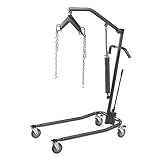 Drive Medical Hydraulic Patient Lift
A full lift is what makes one person able to manage a transfer alone. It is the single purchase that most often delays a move into residential care.
Check price on Amazon →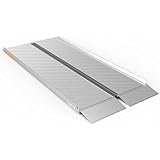 EZ-ACCESS Singlefold Wheelchair Ramp, 6 ft
Folds like a suitcase and carries in a car boot, so the same ramp handles the front step at home and the kerb at an appointment.
Check price on Amazon → Drive Medical Nitro Rollator with Seat
The seat matters more than the wheels. Being able to stop and rest is what decides whether someone still goes out at all.
Check price on Amazon → Vive Stand Assist Rail for Couch or Chair
Getting out of a low sofa is where most falls at home start. This is the cheapest thing on the list and often the first one needed.
Check price on Amazon →As an Amazon Associate we earn from qualifying purchases, at no extra cost to you. Researched guidance, not medical advice. Prices change, so check before buying.
Eligibility Requirements
Your Parent Must:
- Be enrolled in MassHealth Standard or CommonHealth
- Have a disability that requires hands-on personal care assistance
- Meet the functional criteria established by the PCA Program assessment
- Be able to direct their own care, or have a Surrogate who can direct it
- Be 18 years of age or older (separate pediatric PCA rules apply for minors)
You (the PCA) Must:
- Be 18 years of age or older
- Not be the member's spouse or the parent of a minor member
- Pass a CORI (criminal offender record information) background check
- Pass a Registered Nurse Registry check
- Be legally authorized to work in the United States
- Complete enrollment paperwork with Tempus Unlimited (the Fiscal Intermediary)
If your parent has dementia or cognitive impairment that prevents them from directing their own care, a Surrogate can manage the PCA Program on their behalf. The Surrogate handles all employer functions, including hiring, firing, scheduling, and supervising the PCA. An adult child can serve as both Surrogate and PCA, making this a practical option for dementia caregiving families.
How to Apply: Step-by-Step
- Apply for or verify MassHealth enrollment. Your parent must be enrolled in MassHealth Standard or CommonHealth. Apply at mass.gov/masshealth or through the Massachusetts Health Connector at 1-800-841-2900.
- Request a PCA Program assessment. Contact your parent's MassHealth plan or call the PCA Program at 1-800-896-2200 to request a PCA assessment. An Aspen Medical Group (AMG) nurse will conduct a home visit to evaluate your parent's functional needs and authorize PCA hours.
- Get authorized hours confirmed. After the assessment, MassHealth issues a PCA Authorization Letter specifying the approved weekly PCA hours. This letter is required to begin the enrollment process.
- Choose a Personal Care Management (PCM) Agency. Massachusetts requires members to work with a PCM Agency that provides counseling and support for managing the PCA employer relationship. The PCM agency helps members understand their responsibilities as employers. Your parent selects a PCM agency, options include PCMG or local agencies.
- Enroll as a PCA with Tempus Unlimited. Tempus Unlimited is the state's Fiscal Intermediary for PCA payroll. You will complete your W-4, I-9, a background check authorization, and a PCA enrollment form. Tempus Unlimited processes your paycheck every two weeks.
- Complete your parent's Backup Plan. Massachusetts requires all PCA participants to have a written Backup Plan identifying who will provide care if the PCA is unavailable. Document this with your PCM agency.
- Begin care and submit timesheets electronically. Submit timesheets through Tempus Unlimited's online portal. Paychecks arrive bi-weekly. Your parent (or Surrogate) approves each timesheet before it is processed.
Massachusetts's PCA Program is an entitlement for qualifying MassHealth members. If your parent meets the eligibility criteria, there is no waiting list. Approval timelines typically run 4–6 weeks from assessment to first paycheck.
Other Massachusetts Programs That Pay Family Caregivers
MassHealth Home- and Community-Based Waiver Programs
Beyond the PCA Program, Massachusetts offers several Medicaid waivers that may provide additional services and caregiver support, including the Adult Foster Care (AFC) program where a family member can be certified as a caregiver and receive a daily stipend for providing 24/7 care. AFC rates can be substantial, contact your local ASAP (Aging Services Access Point) to inquire about eligibility.
Executive Office of Elder Affairs (EOEA) Programs
Massachusetts's EOEA funds the Caregiver Homes Program and other elder care supports through its Aging Services Access Points. Some ASAP programs provide direct payments to family caregivers for specific services. Contact your local ASAP at 1-800-243-4636 or visit mass.gov/elder-affairs.
VA Programs for Massachusetts Veterans
If your parent is a veteran, the VA Veteran-Directed Care program and Program of Comprehensive Assistance for Family Caregivers (PCAFC) may provide monthly stipends or budgets to pay family caregivers. Contact the Bedford VA or Boston VA Healthcare System for details.
Personal Care Agreement (Private Pay)
Families who do not qualify for MassHealth can establish a formal written Caregiver Agreement allowing your parent to pay you from private funds. This must be drafted with an elder law attorney and cover future services only. It is especially important in Massachusetts given the state's Medicaid estate recovery rules.
Check Your Parent's MassHealth Eligibility
Our free Benefits Checker helps identify whether your parent qualifies for MassHealth PCA services and other caregiver pay programs in Massachusetts.
Check Eligibility NowTax Implications for Massachusetts PCAs
Federal Taxes
- W-2 from Tempus Unlimited: Your PCA wages are reported on a W-2. Federal income tax, Social Security, and Medicare taxes are withheld automatically.
- IRS Notice 2014-7: If you live in the same household as your parent (the PCA member), your wages may qualify for the federal Difficulty of Care income exclusion. Consult a CPA, this exclusion can be substantial at Massachusetts pay rates.
Massachusetts State Taxes
- Massachusetts imposes a 5% flat state income tax on wages.
- Massachusetts follows the federal Difficulty of Care exclusion for qualifying in-home PCAs, meaning live-in caregivers may avoid Massachusetts income tax on PCA wages as well.
- Consider contributing to a Massachusetts 401(k) or IRA to reduce taxable income.
What Massachusetts PCAs Are Earning
A Massachusetts family caregiver working 30 hours per week at $18/hour earns approximately $2,160/month, about $25,920 per year. At 40 hours per week and $19/hour, annual earnings reach $39,520. These are W-2 wages with benefits eligibility through 1199SEIU and no commute. Massachusetts PCAs who qualify for the federal Difficulty of Care exclusion (live-in caregivers) take home significantly more after tax.
Contact Information
- MassHealth PCA Program: 1-800-896-2200 | mass.gov/pca
- Tempus Unlimited (Fiscal Intermediary): 1-800-323-0563 | tempus-unlimited.org
- Massachusetts EOEA / ASAP: 1-800-243-4636 | mass.gov/elder-affairs
- 1199SEIU (PCA Union): 1199seiu.org
Frequently Asked Questions
Massachusetts pays Personal Care Attendants, including family members hired by MassHealth participants, between $17 and $20 per hour as of 2026. Rates are set statewide and are among the highest on the East Coast, reflecting Massachusetts's high cost of living.
The Personal Care Attendant (PCA) Program is a MassHealth benefit that allows eligible members to hire their own personal care attendants, including family members, rather than using a home care agency. The program gives members control over who provides their personal care and how it is scheduled.
Yes. Adult children (18 years or older) can be hired as Personal Care Attendants by their parents under the Massachusetts PCA Program. Spouses and parents of minor children are typically excluded. Adult children, siblings, and other adult relatives are generally eligible.
A Surrogate is a person who manages the PCA Program on behalf of a member who is unable to direct their own care due to cognitive or physical limitations. The Surrogate performs the employer functions, hiring, scheduling, and supervising the PCA. An adult child can be both the Surrogate and the hired PCA in some circumstances, depending on the member's care situation.
Yes. Massachusetts Personal Care Attendants are represented by the 1199SEIU United Healthcare Workers East and SEIU Local 888 Home Care Division. Union representation has contributed to Massachusetts having some of the highest PCA wage rates in the country.
The PCA benefit is available to MassHealth Standard and CommonHealth members who have a disability and need personal care services. You apply for MassHealth through the Massachusetts Health Connector or your local MassHealth enrollment center, then request a PCA assessment through your MassHealth managed care plan or the Aspen Medical Group.
The Massachusetts PCA Program operates as an entitlement benefit for eligible MassHealth members, meaning there is no waiting list. If your parent meets the medical and financial criteria for MassHealth and qualifies for the PCA benefit through a functional assessment, they are entitled to receive it without waiting.
Massachusetts does not require PCAs to complete a standardized training program before beginning work. However, the member (or Surrogate) is responsible for training the PCA on the specific tasks outlined in the care plan. Optional training is available through the Personal Care Management Agency and 1199SEIU training programs.