Get Paid to Care for Your Elderly Parent in Georgia
Yes, Georgia pays family caregivers $10–$14/hour through the Community Care Services Program (CCSP) and SOURCE Medicaid waivers. Your parent must qualify for Georgia Medicaid and need nursing-home-level care. If eligible, you can enroll as their paid personal care attendant through a Georgia-approved provider agency.
If you're already providing daily care for an aging parent in Georgia, helping with bathing, meals, transportation, or medication reminders, there are state programs that can pay you for that work. Georgia's Medicaid home and community-based waivers exist specifically to help seniors stay at home rather than enter a nursing facility, and family members can be hired as the paid caregiver.
This guide covers the two primary pathways, CCSP and SOURCE, and walks you through eligibility requirements, pay rates, and the exact steps to get enrolled as a paid family caregiver in 2026.
Georgia's Two Main Programs: CCSP and SOURCE
Georgia operates two Medicaid home and community-based service (HCBS) waivers that can pay family caregivers. Both are administered by the Georgia Department of Community Health and coordinated through the Department of Human Services Division of Aging Services (DAS).
Community Care Services Program (CCSP)
CCSP is Georgia's largest home and community-based waiver for elderly and disabled adults. It provides personal care, homemaker services, adult day health, respite care, and other supports that allow Medicaid-eligible seniors to remain safely at home. CCSP recipients work with a case manager from an Area Agency on Aging (AAA) who authorizes specific services and coordinates the care plan.
Under CCSP, personal care services can be delivered by a provider enrolled with the state Medicaid agency. This includes family members who complete the required provider enrollment process through a licensed home care agency that operates in your area.
SERVICE Options Using Resources in a Community Environment (SOURCE)
SOURCE integrates primary care physician oversight with community-based long-term services. It is designed for individuals who are medically complex and at high risk of nursing home placement. SOURCE participants receive a higher level of care coordination, with their primary care physician actively involved in the care plan.
Both programs allow family members to provide and be paid for personal care services under the right circumstances. Your parent's case manager will help determine which program is the better fit based on medical complexity and local availability.
If your parent has significant medical needs and a regular primary care physician, SOURCE may be the better fit. If they primarily need personal care and homemaker support without complex medical coordination, CCSP is the more common pathway. Both programs can pay family caregivers for personal care services.
The equipment that changes the most
Most of what caregiving costs is time. These four are the purchases that reliably buy some of it back, and they are the ones families tell us they wish they had bought sooner.
 Drive Medical Hydraulic Patient Lift
A full lift is what makes one person able to manage a transfer alone. It is the single purchase that most often delays a move into residential care.
Check price on Amazon →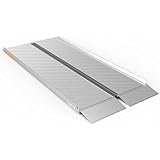 EZ-ACCESS Singlefold Wheelchair Ramp, 6 ft
Folds like a suitcase and carries in a car boot, so the same ramp handles the front step at home and the kerb at an appointment.
Check price on Amazon → Drive Medical Nitro Rollator with Seat
The seat matters more than the wheels. Being able to stop and rest is what decides whether someone still goes out at all.
Check price on Amazon → Vive Stand Assist Rail for Couch or Chair
Getting out of a low sofa is where most falls at home start. This is the cheapest thing on the list and often the first one needed.
Check price on Amazon →As an Amazon Associate we earn from qualifying purchases, at no extra cost to you. Researched guidance, not medical advice. Prices change, so check before buying.
Does Your Parent Qualify?
To receive services through CCSP or SOURCE, your parent must meet three sets of requirements:
1. Georgia Medicaid Eligibility
Your parent must be enrolled in Georgia Medicaid (also called Georgia's Low Income Medicaid program for the aged, blind, and disabled). For a single individual in 2026, the income limit is generally around $914/month (300% of the SSI Federal Benefit Rate applies for certain waiver pathways). Asset limits are typically $2,000 for a single individual, though certain assets like a primary home and one vehicle are exempt.
If your parent's income slightly exceeds the limit, Georgia has a Medically Needy pathway that allows them to spend down to eligibility by deducting medical expenses. An elder law attorney or DFCS caseworker can help determine if this applies.
2. Functional Need for Nursing-Level Care
Your parent must require a level of care that would otherwise necessitate nursing home placement. A state-approved assessor evaluates their activities of daily living (ADLs) and instrumental activities (IADLs) to determine if they meet the clinical criteria. Most seniors with moderate to severe physical or cognitive limitations will qualify.
3. Age and Disability Status
CCSP serves individuals age 65 and older, or adults ages 18–64 who are physically disabled. SOURCE serves individuals of any age with significant medical complexity. Most elderly parents needing home care will qualify on the age criterion alone.
Many families assume their parent earns too much or has too many assets. Georgia's Medicaid rules include important exemptions (home, car, burial funds) and spend-down pathways. It's always worth applying, a denial can be appealed, and initial screenings are free through the AAA.
How Much Can You Get Paid?
Georgia's Medicaid waiver programs pay personal care attendants at state-established rates that are generally lower than those in states with higher minimum wages. In 2026, the typical range for personal care attendant services under CCSP and SOURCE is:
- Personal care attendant services: approximately $10.00–$14.00/hour
- Homemaker services: approximately $12.00–$15.00/hour
- Respite care: rates vary by setting (in-home vs. facility-based)
The exact rate you receive depends on the provider agency you work through, the specific service type, and any supplemental funding sources. Hours authorized depend on your parent's assessed care needs, a recipient with moderate needs might receive 20–40 hours per week, generating $800–$2,240/month in caregiver income at these rates.
Unlike California's IHSS, Georgia's waiver programs do not pay caregivers directly from a state portal. You typically work through a licensed home care agency that processes your timesheet and payroll. The agency takes an administrative margin, which is why actual take-home rates may be on the lower end of the published range.
How to Apply: Step-by-Step
-
Apply for Georgia Medicaid
Your parent applies for Medicaid through the Georgia DFCS (Division of Family and Children Services) office in their county, online at Georgia.gov, or by calling 1-877-423-4746. Bring proof of income, identification, residency, and asset documentation. Processing typically takes 30–45 days. -
Request a CCSP or SOURCE Assessment
Once your parent is enrolled in Medicaid (or while applying), contact your regional Area Agency on Aging to request a waiver assessment. You can find your local AAA through the Georgia Division of Aging Services at 1-866-552-4464. A case manager will be assigned. -
In-Home Needs Assessment
An AAA case manager visits your parent's home to evaluate their functional limitations and determine which services they need and how many hours should be authorized. Be present and provide thorough, accurate information about what your parent cannot do independently. -
Care Plan Development
The case manager develops a written care plan listing authorized services and hours. This plan must be approved before services begin. If you disagree with the hours or services authorized, you have the right to request a fair hearing. -
Select a Provider Agency
Your parent selects a Georgia Medicaid-enrolled home care agency to deliver their personal care services. You then apply to that agency as a caregiver. The agency conducts its own background check and hiring process. -
Complete Provider Enrollment
The agency completes your enrollment paperwork, which includes a background check, orientation training, and documentation of your relationship to the recipient. This process typically takes 2–3 weeks. -
Begin Providing Care and Submitting Timesheets
Once enrolled, you provide authorized services and submit timesheets according to the agency's schedule. The agency processes payroll; most pay bi-weekly. Direct deposit is typically available.
Other Programs for Georgia Caregivers
Georgia Elderly and Disabled Waiver
In addition to CCSP and SOURCE, Georgia operates the Elderly and Disabled (E&D) waiver, which provides similar home and community-based services. The E&D waiver may have different slot availability in your area. Your AAA case manager can advise on which waiver has the shortest wait time.
VA Veteran-Directed Care
If your parent is a veteran enrolled in VA healthcare, the Veteran-Directed Care program may pay you as a family caregiver with a monthly budget separate from Medicaid. Georgia has multiple VA medical centers in Atlanta, Augusta, and other cities participating in this program. Budgets typically range from $2,000 to $4,000/month depending on assessed needs.
Personal Care Agreement (Private Pay)
If your parent does not qualify for Medicaid, they can pay you directly through a written Personal Care Agreement at fair market rates. This document establishes a formal employer-employee relationship and is important for Medicaid planning if your parent may need Medicaid in the future. An elder law attorney can draft a compliant agreement for approximately $300–$600.
Georgia Respite Coalition
The Georgia Respite Coalition and Georgia Caregiver Support Program offer limited grants and vouchers to family caregivers for respite breaks. These are not ongoing income sources but can provide financial relief for intensive caregiving situations.
Tax Implications for Georgia Caregivers
Understanding how your caregiver income is taxed is essential for financial planning:
Live-In Provider Tax Exclusion
If you live in the same home as your parent (the Medicaid waiver recipient), your caregiver income may be excluded from federal income tax under IRS Notice 2014-7 (the "difficulty of care" exclusion). This exclusion applies when you receive payments from a Medicaid waiver program for providing care in your own home. Georgia follows federal tax treatment for this exclusion.
Non-Live-In Providers
If you do not live with your parent, your caregiver income is fully taxable. The provider agency will issue a W-2 at year-end. You may be eligible to deduct mileage and other caregiving-related expenses. Consult a tax professional familiar with caregiver taxation in Georgia.
Working as a paid caregiver through an agency creates an official employment record. You'll earn Social Security credits and may be eligible for the agency's benefits (such as workers' compensation). This is an important long-term financial consideration for caregivers who previously left the workforce.
Estimate Your Parent's Care Costs
Our free calculator helps you understand Medicaid waiver eligibility and what caregiver income might look like for your family's situation.
Use the Care Cost CalculatorFrequently Asked Questions
Yes. Georgia's CCSP and SOURCE Medicaid waivers allow adult children and other relatives to be paid as personal care attendants. Your parent must qualify for Georgia Medicaid and meet the nursing-home-level care criteria established by DFCS and the Division of Aging Services.
Georgia's Medicaid waiver programs pay personal care attendants approximately $10–$14 per hour depending on the program and provider agency rates. Rates are set by the state Medicaid agency and reviewed periodically. Homemaker services may pay slightly more.
Both are Georgia Medicaid home and community-based waivers. CCSP serves a broader elderly and disabled population focused on personal care and homemaker support. SOURCE integrates primary care coordination with community services and is better suited for medically complex individuals. Your DFCS caseworker will help determine which program fits your parent's needs.
Yes. Both CCSP and SOURCE cover personal care services, homemaker services, respite care, and other supports that allow seniors to remain at home instead of entering a nursing facility. These services can be delivered by a family caregiver enrolled with a licensed home care agency.
Start by applying for Georgia Medicaid through your county DFCS office or online at Georgia.gov. Once your parent is enrolled in Medicaid, contact your regional Area Agency on Aging to request a CCSP assessment. A case manager will conduct an in-home needs assessment to determine eligibility and authorize hours.
Georgia's waiver programs generally allow spouses to be paid caregivers under consumer-directed arrangements. Confirm current policy with your DFCS or AAA case manager, as rules can vary by program and are subject to change.
If you live in the same home as your parent (the Medicaid waiver recipient), federal income tax may be excluded under the IRS difficulty-of-care provision (IRS Notice 2014-7). Georgia follows federal treatment on this exclusion. If you do not live with your parent, income is fully taxable and reported on a W-2 issued by the provider agency.
CCSP periodically has waiting lists due to slot limitations. If your parent is placed on a waitlist, ask your AAA case manager about the SOURCE waiver or Georgia's Elderly and Disabled waiver, which may have shorter wait times in your region. Contact your local Area Agency on Aging for interim support resources while waiting.