Get Paid to Care for Your Elderly Parent in Florida
Yes, Florida pays family caregivers $11–$14/hour through the Consumer Directed Care Plus (CDC+) program and the Statewide Medicaid Managed Care Long-Term Care program. Your parent must qualify for Florida Medicaid. Adult children and other relatives (excluding spouses) can be paid caregivers. Contact your local Aging and Disability Resource Center (ADRC) or call 1-800-963-5337 to start.
Florida has the highest percentage of residents aged 65+ of any U.S. state. With over 4.5 million seniors and a growing demand for home-based care, Florida's Medicaid system has expanded consumer-directed options that allow family members to get paid for the care they provide every day.
Florida's system is more complex than some states, it runs through managed care organizations rather than directly through the state, but the payoff for navigating it correctly is real, reliable income for family caregivers.
What Programs Pay Family Caregivers in Florida?
1. Consumer Directed Care Plus (CDC+)
CDC+ is Florida's flagship self-directed Medicaid program. It allows Medicaid recipients who are enrolled in the Statewide Medicaid Managed Care Long-Term Care (SMMC-LTC) program to manage their own care budget and hire their own caregivers, including adult children and other relatives who are not the legally responsible spouse.
Under CDC+, your parent receives a monthly budget based on their authorized Medicaid services. They use this budget to pay you as their caregiver. A Support Broker (provided through the program) helps manage compliance, timesheets, and employer responsibilities.
2. Statewide Medicaid Managed Care Long-Term Care (SMMC-LTC)
SMMC-LTC is the gateway program for Medicaid home and community-based services in Florida. Enrollment in SMMC-LTC is required before accessing CDC+. SMMC-LTC is administered through contracted managed care plans (including Sunshine Health, Humana, and others depending on your region). Your parent's managed care plan coordinator helps assess needs and authorize hours.
3. Aged and Disabled Adult Medicaid Waiver
The Aged and Disabled Adult (ADA) Waiver provides home-based services to elderly and disabled Florida Medicaid recipients as an alternative to nursing home placement. It includes consumer direction options and may offer additional service types not available under base SMMC-LTC coverage.
4. PACE (Program of All-Inclusive Care for the Elderly)
Florida has PACE sites in Miami, Tampa, Orlando, Jacksonville, and other metro areas. PACE provides comprehensive care management and day health services, reducing overall care burden and helping your parent remain at home. While PACE doesn't pay family caregivers directly, it can complement your caregiving role.
Florida Medicaid programs generally exclude spouses from serving as paid caregivers. Adult children, siblings, and other relatives who are not the legally responsible party can be paid. If you are your parent's spouse, explore VA programs and the private Caregiver Agreement option instead.
The equipment that changes the most
Most of what caregiving costs is time. These four are the purchases that reliably buy some of it back, and they are the ones families tell us they wish they had bought sooner.
 Drive Medical Hydraulic Patient Lift
A full lift is what makes one person able to manage a transfer alone. It is the single purchase that most often delays a move into residential care.
Check price on Amazon →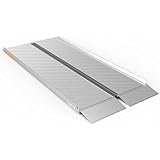 EZ-ACCESS Singlefold Wheelchair Ramp, 6 ft
Folds like a suitcase and carries in a car boot, so the same ramp handles the front step at home and the kerb at an appointment.
Check price on Amazon → Drive Medical Nitro Rollator with Seat
The seat matters more than the wheels. Being able to stop and rest is what decides whether someone still goes out at all.
Check price on Amazon → Vive Stand Assist Rail for Couch or Chair
Getting out of a low sofa is where most falls at home start. This is the cheapest thing on the list and often the first one needed.
Check price on Amazon →As an Amazon Associate we earn from qualifying purchases, at no extra cost to you. Researched guidance, not medical advice. Prices change, so check before buying.
Does Your Parent Qualify for Florida Medicaid?
Income Requirements
For Florida's Medicaid long-term care programs in 2026, your parent must have monthly income at or below approximately $2,742 (300% of the SSI Federal Benefit Rate). Social Security, pension income, and investment income all count toward this limit.
If your parent's income exceeds this limit, a Qualified Income Trust (QIT, also called a Miller Trust) can redirect excess income to bring the countable amount below the threshold. A Florida elder law attorney can establish a QIT for approximately $300–$600.
Asset Requirements
Countable assets must generally be $2,000 or less for a single individual. Excluded assets include the primary home (with intent to return), one vehicle, term life insurance, personal belongings, and prepaid burial arrangements.
Functional Need
Your parent must require a nursing home level of care to qualify for SMMC-LTC and CDC+. A comprehensive assessment by the managed care plan determines this. The assessment evaluates ADL dependencies, cognitive status, and medical needs.
Florida's Medicaid long-term care system can take several months from initial application to first caregiver paycheck. The state's waitlist management system (CARES) prioritizes applications by urgency level. Start the process as early as possible, don't wait until the situation becomes a crisis.
How Much Will You Get Paid?
Under CDC+, your pay rate is set within the individual monthly budget allocated for your parent's care. Typical rates for personal care services in Florida:
- Personal care services: $11.00–$13.50/hr
- Homemaker/companion services: $11.00–$12.00/hr
- Respite care: $11.50–$14.00/hr
- Skilled services (if qualified): higher rates apply
Florida's minimum wage is $13.00/hr as of September 2025, with scheduled increases to $15/hr by 2026 under Amendment 2. This is raising the floor on Medicaid caregiver rates. The total monthly budget depends on your parent's authorized service hours, recipients with significant care needs may receive 20–50+ hours of authorized services per week.
How to Apply: Step-by-Step
-
Apply for Florida Medicaid
Apply online through the ACCESS Florida portal, by calling 1-866-762-2237, or at your local Department of Children and Families (DCF) office. Gather proof of income, assets, residency, and identity. Processing typically takes 45 days. -
Contact the Aging and Disability Resource Center (ADRC)
Your local ADRC is the entry point for Florida's long-term care system. They conduct a pre-eligibility screening and can help your parent understand their options. Find your local ADRC at eldercare.acl.gov or call 1-800-963-5337. -
Complete the CARES Assessment
A CARES (Comprehensive Assessment and Review for Long-Term Care Services) assessment is conducted by the Florida Department of Elder Affairs to determine functional eligibility and priority for SMMC-LTC enrollment. This in-person assessment evaluates your parent's ADL dependencies and medical needs. -
Enroll in SMMC-LTC
Once approved, your parent chooses a managed care plan serving their county. The plan conducts its own assessment and develops a care plan authorizing specific services and hours per month. -
Request CDC+ Enrollment
Once enrolled in SMMC-LTC, your parent requests transfer to the CDC+ program, either through their managed care plan or through the ADRC. Not all managed care plans offer CDC+, so confirm availability before enrollment. -
Select a Support Broker
Your parent chooses a Support Broker from the CDC+ approved list. The Support Broker helps manage the employer relationship, timesheets, and budget compliance. Support Broker services are paid from the CDC+ budget. -
Complete Employee Enrollment
You complete employment paperwork including background check, I-9, and W-4. Your parent completes documentation of the employer-employee relationship. The Support Broker guides both of you through this process. -
Begin Care and Submit Timesheets
Provide authorized care and submit timesheets through the CDC+ system. The fiscal intermediary processes payroll and issues paychecks or direct deposit every two weeks.
Other Programs for Florida Caregivers
VA Veteran-Directed Care
Florida has VA medical centers in Miami, Tampa, Orlando, Gainesville, Bay Pines, and West Palm Beach, all participating in the Veteran-Directed Care program. If your parent is a veteran enrolled in VA healthcare, they may receive a monthly budget of $2,000–$4,500 to hire and pay you as their caregiver. Contact the VA social worker at your parent's VA medical center to inquire about enrollment. This program operates independently of Medicaid.
VA Aid and Attendance
Florida has one of the largest veteran populations in the country. Veterans and surviving spouses may qualify for VA Aid and Attendance pension benefits of $1,000–$2,300/month above the base VA pension. While this doesn't pay family caregivers directly, it significantly increases available funds for care. Free assistance applying is available through the VFW, American Legion, or DAV, never pay a fee to apply for VA benefits.
Community Care for the Elderly (CCE) Program
Florida's CCE program provides home care services to elderly individuals at risk of nursing home placement who may not yet qualify for Medicaid. Services are provided through Area Agencies on Aging. While CCE primarily funds formal care agencies rather than family members, it can serve as a bridge while pursuing Medicaid eligibility.
Caregiver Agreement (Private Pay)
Your parent can pay you directly through a written Personal Care Agreement at market rates regardless of Medicaid status. This requires a written contract, time logs, and payment at rates consistent with professional market rates. A Florida elder law attorney should draft the agreement, particularly if Medicaid eligibility planning is involved.
Tax Implications for Florida Caregivers
- W-2 income: CDC+ pays through a fiscal intermediary that issues a W-2. Federal income tax and FICA (Social Security/Medicare) are withheld based on your W-4 elections.
- No Florida state income tax: Florida has no state income tax, which is a meaningful advantage for caregivers.
- Live-in provider exclusion: If you live with your parent, consult a tax professional about the IRS difficulty-of-care payment exclusion (IRS Notice 2014-7). Applicability depends on the specific payment structure under CDC+.
- Private Caregiver Agreements: If paid privately, you're likely self-employed and must pay self-employment tax quarterly.
Estimate Your Parent's Care Costs
Our free calculator helps you understand what Florida programs might provide for your family's specific situation.
Use the Care Cost CalculatorFrequently Asked Questions
Yes. Florida's CDC+ program and SMMC-LTC Medicaid program allow eligible recipients to hire adult children and other relatives as paid caregivers. Spouses are generally excluded. Your parent must qualify for Florida Medicaid long-term care services based on income, assets, and functional need assessments.
Florida CDC+ family caregiver pay ranges from approximately $11 to $14 per hour for personal care and homemaker services. Rates are set within your parent's individual monthly budget. Florida's minimum wage of $13/hr (rising to $15) sets a floor that continues to push Medicaid rates upward.
CDC+ is Florida's self-directed Medicaid waiver program that gives recipients a monthly care budget to hire their own caregivers, including family members. Participants work with a Support Broker who helps manage program compliance. CDC+ requires prior enrollment in the Statewide Medicaid Managed Care Long-Term Care program.
Yes. Florida's Medicaid long-term care programs require monthly income at or below approximately $2,742 (300% SSI FBR). If income is higher, a Qualified Income Trust (Miller Trust) can bring countable income below the threshold. Asset limit is $2,000 for individuals. The primary home is excluded as long as there is intent to return.
Florida's SMMC-LTC program manages enrollment through a priority system, those with the most urgent care needs are prioritized. There can be waiting periods. Applying early and working with your local ADRC to document urgency is important. Once enrolled in SMMC-LTC, transitioning to CDC+ self-direction is generally more straightforward.
Spouses are generally excluded from serving as paid caregivers under Florida Medicaid programs. Adult children, siblings, and other relatives (who are not the legally responsible spouse) can be paid. If you're a spouse caregiver, VA Veteran-Directed Care (if your parent is a veteran) and a private Caregiver Agreement are the main alternative pathways.
A Support Broker is a trained professional who helps CDC+ participants manage their program responsibilities, budget management, employer documentation, timesheet processing, and ensuring program compliance. Support Broker services are required for CDC+ participation and are funded from the participant's monthly care budget, so there is no out-of-pocket cost to you.
Start by applying for Florida Medicaid through ACCESS Florida. Contact your local Aging and Disability Resource Center (ADRC) at 1-800-963-5337 for a CARES assessment. Once enrolled in SMMC-LTC through a managed care plan, request enrollment in CDC+. The ADRC can guide you through each step of the process.